|
Volume 12, Number 1, Winter 2000-2001 |
||||||||||||||
|
An
Online Magazine for Alumni and Friends of Eastern
Washington University |
||||||||||||||
| Home | ||||||||||||||
| Top Story | ||||||||||||||
| Our Man in Bogota | ||||||||||||||
| Mongolian Search | ||||||||||||||
|
by John Soennichsen
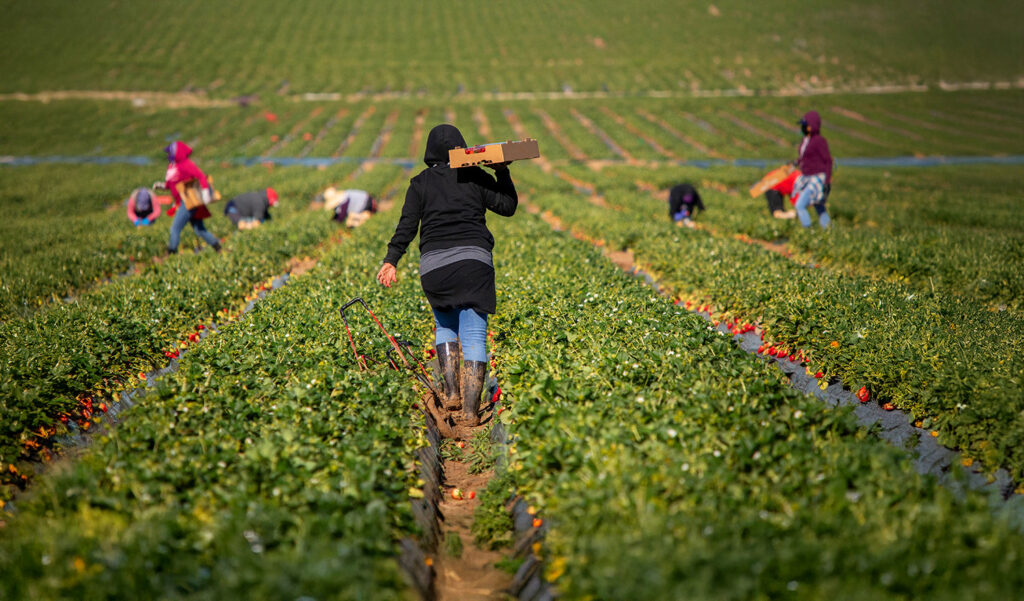
"I grew up in a family that for generations had been hard working laborers. I was the first person in all the generations I knew about to receive a four-year college degree. My father always talked about, 'When you go to college,' not 'If you go to college.' I was well aware that although I grew up in a loving and caring family, the price of a college education was my responsibility. For as long as I can remember, I saved money for my college education. Before I was able to obtain a work permit, I mowed lawns in my hometown. Throughout two summers, I pulled my lawnmower on a trailer behind my bicycle and mowed 20 to 30 lawns per week. One summer, I worked for the owner of a local apple orchard. He had planted several acres of new trees. It was my job to set and work a trap line to catch gophers before they feasted on the roots of the new trees. Each Friday I would arrive at his office with jars of gopher tails. While holding our noses, we would count the tails, for which I was then paid, by the tail. During my last two years of high school, I worked for a local creamery. Before school each day, I would receive the raw milk from the dairies, weigh the 10-gallon cans, take the appropriate laboratory samples and start the pasteurizing process. The work clothes for that job included rubber boots, a rubber apron and rubber gloves. When I went directly from my morning work to school, the smell of the rubber clothing made me one of the less popular to sit next to. After school, I would return to the creamery to clean the pasteurizing vats and wash bottles. On Saturdays, I would deliver milk on a residential and commercial route. While attending Eastern, I worked summers for a hometown cannery. As a field laborer, the formula was simple, the longer one worked each day, the more one made each day. I also supplemented my summer work by driving truck during wheat harvest. During my first two years at Eastern, I worked in the Louise Anderson Dining Hall and at Hargreaves Library. I worked both jobs for two months and then was told that students could only work one campus job and for a limited number of hours each month. The compromise was that during the holiday breaks, when the dining hall was not open, I was able to work longer hours at the library. The last years of our time at Eastern I worked in a pizza parlor and at a gas station. My wife, Rhoda, worked for a local pharmacy. I was also fortunate to be chosen by my professors as a teaching assistant. I was able to complete my education at Eastern without borrowing one cent. However, by graduation we were broke. The day before graduation, I took out a $400 student loan so we would have enough money to move and start our careers. Budke is currently a business consultant in Spokane and serves on the EWU Board of Trustees. Jeremiah Riley, business major
When he's not in class or hitting the books, it's highly probable that he's on his haunches in the dirt, a horse's hoof in one hands and a shoe in the other. "I grew up on a ranch in Idaho with horses and pack mules," says Riley with a smile as broad as the brim of his hat. "A horse shoer would come and stay for a while to shoe all our animals, so I was able to watch him and learn what shoeing was all about. Later on, I moved to Moses Lake to work on a relative's ranch. I made friends with a horse shoer there, and learned about a school in Walla Walla, where they teach you the craft but from a scientific, anatomical viewpoint, not simply doing it the way grand-dad did it." After graduating from Warden High School, near Moses Lake, Riley passed an intensive 6-week summer course at the shoeing school, then advertised as a shoer in small town papers. He enrolled in Big Bend Community College in 1996 and had his AA degree a year and a half later. Besides his shoeing, he also worked at a feed lot to earn money for college. In 1998 he transferred to Eastern and continued to shoe horses for income.
"This is a real physical job," he says, "and you get worn out pretty easily. That doesn't mean I want to work in an office," he adds quickly, "but I'd like to apply my business degree to some aspect of this general area like stock contracting or something." That's why when business is good, he appreciates the income he can raise to pay for his education at Eastern. "Aside from a little financial aid, this is pretty much my sole source of funding for school," says Jeremiah. "But I'm doing okay so far." "One way I made money was through psychology tests that actually paid you cash! One I have not forgotten was the "$20 cash psych test๎ as it was advertised in the campus magazine. The task was simple! Sit in a dark, sound-proof room in a real comfortable poofy old chair and push a button held in one hand when a specific geometric shape appeared on a small screen in front of you. There were only three shapes a circle, square and triangle. The female student instructed me on how the thumb button worked and then how the little stinger on the other hand worked. It was a little band that went over your finger and when you missed a shape you would get a little electrical charge like the old hand shake buzzer. I put on some head phones and she left the room and closed the door. I then heard her over the head phones and she asked me to push the thumb button than I saw the square come up on the screen. The images were slow and, sure enough, the square came up a few times. I received no shocks for a while, and was sure this was the easiest money I had ever made! Pretty soon it was the triangle; she asked me to signal when it came up on the screen which was only about four inches square with a small window in the middle. I was starting to become bored with the simplicity of the test and received my first shock after missing the triangle. Now I sat up in the chair and paid even more attention to the screen I didn't like the shock too much! On to the circle. Now I was really sleepy and missing more and more circles, when she came up on the headset and asked me how I was doing. I replied "fine, a bit sleepy, but I'm O.K." "Do you want to continue?" she asked. "Yes," was my response! After about a minute I couldn't keep my heavy eyes open any more and the shocks were coming so fast, I figured I was missing every circle that came up, but could not keep my eyes open. It became real dreamy; my eyes were closed and I was pushing the button as fast as I could to try and hit the circle when it came up. Finally I stood up and pulled the finger ring off and stepped out of the booth. The young lady was very nice in telling me I did very well. She would not answer any of my questions as to what the experiment was, all I know is that it was the most rewarding $20 I ever spent at Goofy's and Showies on beer. I never ever stopped into the psych building again for an experiment. I did, however, take a Psych 100 class, but all I could think about was not going upstairs for a 200 level class, unless I was the one administering one of those twisted research tests! Sayre is currently a producer, director and videographer with Dan Walker Productions in Lewsiton, Idaho. I was born on the farm and like so many others those days, I was a kid with no money but great ambitions. Because I couldn't afford to live on campus, I tried commuting at first. I remember one day we got stuck 16 times trying to get from Medical Lake to Eastern. It didn't take long before I knew that wasn't the way to go; the winter was a bad one in 1949-50. So I went to see a Mrs. Wilms, who was in charge of jobs for students, I had $11 and a flour sack with my clothes and books when I walked in her door. I remember my first job was washing pots and pans in the Monroe Hall cafeteria. After a while, I graduated from that to a job cleaning Hudson Hall, which was the temporary military-style barracks that we had here. After scrubbing floors and cleaning the toilets, I decided to go back to the kitchen, and I ended up serving, cooking and working banquets. Grub is currently Professor Emeritus, Advisor to Corporate CEOs and Foreign Governments. Jill Caterson, education major Think fast - What job lets you hit the road before the sun has risen, negotiate icy country roads and simultaneously discipline teenagers who can't resist the opportunity to "moon" passing cars? Meet Jill Caterson, full-time EWU education major and part-time Cheney School District bus driver. Graduating with a biology degree from EWU in 1995, Jill had a good college grade-point average and planned to pursue a physical therapy degree. Her military service would allow her to get low-income loans, but she'd still need a source of income and wanted to be home after school for her two children who were then 9 and 13 years old. That's when she heard about openings for school bus drivers in Cheney. It took a lot of training and wasn't the most desirable job in the world, but the hours - a two-hour stint in the morning and another in the afternoon - meant she could be at home when her children were. Jill's major has since changed to education and she will probably begin student teaching this fall, but the bus driving has continued for five years and she doesn't regret choosing that part-time job. "My education is important to me," says Jill, "and I've done a lot of things including bartending and running a day care out of my home - in order to make it come true." Jill's oldest daughter, Cassandra, was one of 256 Washington State Promise Scholarship recipients to be awarded a $1600 scholarship by Governor Gary Locke at a recent ceremony at Eastern. When I was 15, my parents separated/divorced and I went to work. My mother had been out of the job market for 20+ years and had an entry level bookkeeping job. The salary did not cover all the necessities for my mom, my sister and I, so I worked after school and summers as a receptionist/clerk at Legal Aid and a circulation and classified ad clerk at the local newspaper, the Tri-City Herald. What wasn't used for clothes, etc., was saved for college. Breaks during that first year I went home and worked for the newspaper. The summer between my freshman and sophomore year I worked at a company that made zirconium tubes used for fuel rods in nuclear reactors. The next summer I worked at Arby's in the valley. The money ran out early spring and I got a job cleaning offices in Showalter Hall. I worked spring/summer. Status was determined by what floor you cleaned. The ultimate status was to clean the 2nd floor which included the President's office. I began cleaning the 3rd floor and then was assigned the 2nd floor. Unfortunately, that spring, Mt. St. Helens blew and most of the offices in the building had windows open and it was a mess. My most embarrassing moment was walking into the President's office to clean and he had his private restroom with the door open. At that time I was living in a one room apartment on 5th Street with really low utility bills/rent (electricity $15/month). Friends in the apartment building were moving to a house just outside of Cheney city limits and there was an upstairs apartment vacant and they asked me if I was interested. I fell in love with the place and decided to move. So I signed the papers and began to make preparations to move. The day we both planned to move both of our cars had broken down. My friend's car had a hole in the oil pan so we used chewing gum to plug the hole and get things moved. What I didn't know at the time was I would have to go to the Rural Electric Association for electricity and the deposit was $80. I did not have enough money for a deposit on the phone and electricity, so for 1- 1/2 months (until I borrowed money from a friend) I had no power. The only power I had was an extension cord from my friends apartment downstairs. At night I could either have light or watch TV. My friends downstairs and I both worked for EWU and got paid once a month. At the end of the month, we were both out of money and we would pool whatever food we had and somehow survive until payday. At my lowest point that summer, just one week before payday all I had in the house was a can of pears. I walked to work and rationed the can. That summer I realized that all of the jobs on campus paid the same amount of money, but if I worked in the food service I got free meals and didn't have to work as hard. So I transferred to the PUB food service. Since graduating with an accounting degree, I have held several jobs before I found my nitch. I took a chance on a temporary job supposed to last 3 weeks and turned into a 15 year journey working with computers. Currently, Magruder is a Microsoft Certified System Engineer and Lead E-Mail Administrator for Pacific Northwest National Laboratories in Richland Wash., managing servers and email accounts for 4,000 employees. Beverly Bumpas, business major When EWU junior Beverly Bumpas needed financial help for college, she combined her love for children and theatrical arts to develop a program called Academic Changes Through Unique Programs, or ACT-UP! Having worked with other mentoring programs over the past few years, she applied existing principles to develop this one, operated through the Cheney School District's alternative middle school program. Counseling, mentoring and creative activities in academics and interpersonal relations are provided through improvisational dramatic arts and exercises. To get approval for the position with Eastern's Career Center, she wrote a job description and provided a description of the proposed program. She also lobbied for three other work-study positions to be funded in connection with the program, and already has filled two of these slots. Mentor Diane Lee is a junior majoring in education and Eric Galinger is a freshman who wants to go into either nursing or teaching. "Between the three of us," says Bumpas, "we're working to broaden these kids' horizons, to help them get control of their emotions, and to learn some social skills. We think it's a great connection we've made between Eastern and the community. And the school district has been very supportive." Mentors try to apply academic knowledge to skills and interests the students already have. If one boy likes bowling, they will take all the students bowling and discuss the principles of math and physics involved in bowling. Bumpas notes that most children score very well when they take standardized career potential tests. A junior at Eastern, Bumpas is pursuing a business degree. She hopes after graduation to implement programs like this in business settings so children with negative upbringings can learn about and have futures in the working world. She might also go on at Eastern for a teaching certificate. George Miller, computer science major
"She wasn't sure how performing monks would go over in Yakima," says George with a smile, "but they were very popular - so much so that they sold out and she had to book a second performance." "They continued to come back to Yakima for the next three years," he adds, "and after the third year, the word got out that they needed drivers to take them around the country to their performance sites." Because George had befriended many of the monks before, his interest was piqued and he called the Monks' Atlanta headquarters to say he was interested. In September 1999, not long after receiving his AA degree at Big Bend Community College, he flew to Atlanta and, with virtually no training, began driving 9 monks of various ages to performance venues all around the United States. Although he primarily took the performers to cities in the west, he also escorted them to cities such as Cincinnati, New York, Washington DC in a 14-person van towing a trailer full of instruments, costumes and personal items. When offered a chance to extend his driving duties to a full year, George agreed. By the time he had completed the job, he had taken his passengers to 64 venues in a year's time. He also drove 55,000 miles in all sorts of weather and under all sorts of time pressures. "I really grew to like and understand these men," he says, "and I welcome the chance to apply the skills I'm learning at Eastern to help them with their goals in this country." |
||||||||||||||
| Honors Program | ||||||||||||||
| Urban Expedition | ||||||||||||||
| Issue Highlights | ||||||||||||||
| Mall Talk | ||||||||||||||
| Sports | ||||||||||||||
| Class Notes | ||||||||||||||
| Then & Now | ||||||||||||||
| Schoolhouse | ||||||||||||||
| In Memoriam | ||||||||||||||
| Letter to Editor | ||||||||||||||
| Guestbook | ||||||||||||||
| Archives | ||||||||||||||
| Alumni Calendar | ||||||||||||||
| Address Update | ||||||||||||||
| Credits | ||||||||||||||
| Alumni Home | ||||||||||||||
| Foundation | ||||||||||||||
| Contact Us | ||||||||||||||