|
Volume 12, Number 1, Fall 2000
|
||||||||||||||||||||||||||||||||||||||||||||
|
An
Online Magazine for Alumni and Friends of Eastern
Washington University
|
||||||||||||||||||||||||||||||||||||||||||||
| Home | ||||||||||||||||||||||||||||||||||||||||||||
| Top Story | ||||||||||||||||||||||||||||||||||||||||||||
| Homecoming 2000 | ||||||||||||||||||||||||||||||||||||||||||||
| High Tech Age | ||||||||||||||||||||||||||||||||||||||||||||
|
EWU
Technology & Computer Science Graduates
But every once in a while, another reason comes along for campus buildings to be upgraded. Such is the case for the planned renovation of Cheney Hall, current home for the Department of Technology. Put simply, the high tech industry is demanding it. And EWU is responding by relocating the Computer Science Department to the renovated building and achieving significant efficiencies by combining computer lab space. Additionally, programs such as the multimedia program in Computer Science and the Computer Engineering program in the Technology Department would benefit by closer proximity to supporting classes. Perhaps the most exciting possibility is that of a new school being formed on campus which would combine the departments of physics, technology and computer science. "With this proposal for a new school," says Dr. Ray Soltero, dean of the College of Science, Mathematics and Technology, "we're looking to integrate our existing curriculum in those areas. We already share some courses, and in computer science and technology, there are some courses required by both majors. We're now looking at ways to share more resources and to increase enrollment."
"I've been privileged to have seven EWU graduates on my team," says Turner. "All of these individuals have consistently demonstrated a positive workplace attitude and the ability to acquire and master leading-edge skills on the job." Drake was honored as outstanding student in Computer Science in 1998. Two other EWU graduates in Computer Science Allyson Falkner, MS, '99; and Mike Walhstadt, MS '97, also work for Turner, who was a member of Eastern's Computer Science faculty from 1992-96. "It's a logical move," says Mick Brzoska, chair of Eastern's Department of Technology. "Most technology students take physics courses, for example, and physics is fundamental to courses such as engineering technology. All technology majors take something in computer science, and students in computer engineering technology take half their courses in technology and half in computer science." Imagine graduating from college and immediately being offered a well-paying job in a leading high-tech company. Imagine so many companies seeking you out that you can pick and choose who you want to work for. Now imagine that this sunny scenario is neither dream nor wishful thinking on the part of computer science and technology students but a startling reality. "The demand for graduates with computer science and technology degrees far exceeds the supply," says Brzoska. "It's like a bidding war out there for qualified people, and with the economy booming, it's a graduate's paradise." According to a recent editorial in Spokane's Journal of Business, "...between 1990 and 1997, high technology employment in Washington state climbed by 59 percent..." The same article points out that Washington's software industry alone would need in excess of 64,000 workers in the next three years. Today, thousands of technology-related jobs in our state go unfilled, and the demand for high-tech employees shows no sign of slowing down. Unfortunately, as demand increases for qualified high tech workers, Eastern's ability to prepare them is being hampered by an older, inflexible building Cheney Hall. "As we met with people in the region," says EWU President Dr. Stephen Jordan, "it was clear that this region was looking for a way to support the high-tech industry. The feeling was that there was a vacuum here in terms of education serving that need. And as we assessed our capabilities, we believed we had the infrastructure necessary to be the university which fills that need." Support for a renovation of Cheney Hall came immediately from the Washington Council of the American Electronic Association (AEA), an organization which had already issued its own call for increased emphasis on educating high-tech workers.
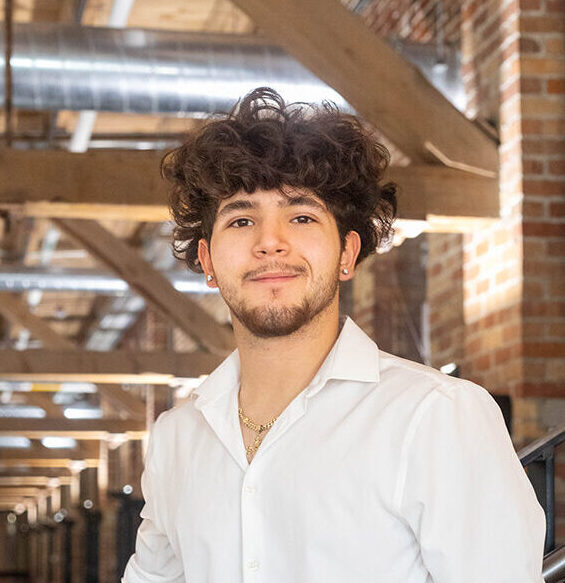
Jenny Schmidt (left; BS-CIS, 2000) is a protocol engineer at Agilent Technologies (formerly Hewlett Packard) in Liberty Lake, Wash. While at Eastern, she had an internship at Hewlett-Packard, then was offered a job at graduation. A registered Native American, Schmidt came to Eastern from Mary Walker High School, in Springdale, Wash. "The best thing about an internship was the way it worked so nicely with the coursework I was taking. Not only could I could apply things I learned at Eastern to my internship, but I could also take things I learned during my internship and apply them to my coursework." When she applied to become part of Agilent's Protocol Group which produces test boxes for cellular phone manufacturers she had to undergo a lengthy, complex interview session. Before it occurred she visited with a number of professors she'd had at Eastern to bone up for the interview. "They were helpful as ever," she recalls, "and were willing and able to recap for me what they had taught me in their classes. That made all the difference." "...the cure is to train more people," read an AEA task force report. "The need is especially acute in engineering, computer science, informational systems and related technology fields." "We contacted the AEA," says Jordan, "and they endorsed our plan and testified in support. They also gave us ideas about what we should be doing with the facility." In response to overwhelming support by high-tech industries and the AEA, Eastern received a go-ahead from the Washington legislature to begin planning for a proposed expansion and modernization of Cheney Hall. If all goes as planned, the completed facility may be open for students in less than three years. "A remodel of Cheney Hall was originally in year 10 of our capital plan," explains Jordan. "There is usually a pre-planning, a planning and a construction phase, and these generally happen over three bienniums - or six years. So, originally, Cheney Hall was something that wouldn't have happened any earlier than 16 years from now." "Part of our future will be new initiatives," says Soltero. "For example, we feel we could offer a bachelor's-based option in computer engineering. Students could then step up to an MS in computer engineering, a lot like the program being offered jointly by Washington State University, Gonzaga University and the University of Idaho." Among the new initiatives being considered are:
And Jordan envisions still another dramatic initiative - doctoral degrees at Eastern. "There is a need for Spokane to have a research capacity - high tech and biotech. So there's no reason we shouldn't think about limited doctoral programs. This is not unique for regional universities. Nearly every state in the nation has regional universities that offer a limited number of doctoral programs because of specific demands their specific regions have." Working with the high-tech industries which have that demand will be a big part of the plan, says Soltero. "We already have ties to the industry," he says. "Boeing, Microsoft, Wagstaff, to name a few - but we'd like to develop new relationships to the point where the industry gives us program input and we look at ways for industries to help support faculty as well as student research and internships." "There is an increasing probability that graduates of EWU programs will stay in the Inland Northwest," adds Jordan, "if there are employers who offer compensation comparable to other parts of the country and if companies are willing to invest in future employees by providing internships and scholarships while students are in school, then jobs after they graduate." The focus of all the flurry of activity is Cheney Hall, an unassuming two-story building built in 1966 and seeing only one renovation (the addition of an elevator in 1979) in 34 years. According to Soltero, "the space is way too small. Over the past three to four years, the number of computer science majors has doubled at Eastern. The computer science department has nowhere to go in that building, and office space is severely limited." "I envision shared facilities with common rooms surrounded by labs with glass walls," says Ray Hamel, chair of the Computer Science Department. "This will be a place where students, faculty and consultants can all interact, and when the new facility is completed, I see it staying open until midnight and constantly humming with activity." "The next few years will be exciting times," says Jordan. "In essence we have two tracks running side by side design and construction of a building and design and construction of a curriculum, and the need is to get them to merge so the facility is truly aligned with the curriculum taught there." EWU Technology & Computer Science Graduates Here are a few EWU graduates with computer science, physics and technology degrees and where they are working now:
Inland Northwest High Tech is Booming One of the most promising activities in the Spokane-Coeur d'Alene area is high tech development. Though the Inland Northwest can't yet claim to be another Silicon Valley, high-tech companies here are experiencing a real boom. Among the most successful of these is Telect, a manufacturer of fiber optic cable, which hired more than 200 new employees during the first six months of this year. Agilent Technologies (formerly Hewlett Packard) also has filled 200 jobs in just half a year. And Schweitzer Engineering Labs has filled more than 137 positions. While salaries
in the Spokane area can't yet compete with those of the Silicon Valley,
homes are much less expensive in the Inland Northwest. Other employees
are willing to forego $100,000 salaries for year-round outdoor recreation
within a stone's throw of their workplace. And developers are accommodating
by planning subdivisions of mid- to upper-priced homes in the same corridor
where the high tech jobs are growing. Spokane developer John Stone credits three factors for convincing him to proceed with his $200 million Riverstone housing project in Coeur d'Alene. "New technology, new jobs and incredible new leadership in this region," he says, "have made it a prime area for growth. I believe the I-90 corridor will change dramatically in Washington and Idaho. And, there are already some encouraging signs that's happening." Liberty Lake, on the Washington side of the Washington-Idaho border, was once the site of small summer homes and cabins, but is now defined by luxury homes, golf courses and retail outlets designed to serve professionals who work in and around the valley, including the Meadow Wood Business Park, where many high tech companies have chosen to locate. "About 10 years ago," says Mark Turner, head of the Spokane Economic Development Council, "urban planners were moving toward sustainable communities - communities that can provide ample employment. This is the result of that sort of planning. At Liberty Lake, they are exporting jobs by which I mean there are currently more jobs than there are people." Across the state line, the number of Idaho high tech firms is growing and individual firms are expanding. A software company called Emake (formerly Smartshop Software) moved to Post Falls just five years ago, employing five people. Today, nearly 300 work there. Shaun O' L. Higgins, director of marketing and sales for The Spokesman Review newspaper and president and chief operating officer, New Media Ventures, is considered an economic guru for the greater Spokane area. In a recent talk to the Spokane Advertising Federation, Higgins outlined the region's demographic and economic indicators. "Significantly," he noted, "if the relative growth rates of the two counties (Spokane, in Washington, and Kootenai, in Idaho) continue at the rates of the 1990s, Kootenai County's population will surpass Spokane's just prior to 2060. The combined metro area would have about 2.1 million people!" Higgins is blunt about what needs to happen for the Spokane area to grow faster than its current pace of 16 percent during the 1990s. "Consumer confidence will start rising again only when wages and jobs start growing again," he says. "Wages and jobs will start growing again when we start focusing our efforts on building industrial clusters, particularly in the high tech area. Such clusters will be developable only when we have repositioned the region in the mind of the nation as a place where all talent is welcome and where knowledge workers feel at home and fully part of the fabric of our society." |
||||||||||||||||||||||||||||||||||||||||||||
| Creative Writing | ||||||||||||||||||||||||||||||||||||||||||||
| Cool Under Fire | ||||||||||||||||||||||||||||||||||||||||||||
| Issue Highlights | ||||||||||||||||||||||||||||||||||||||||||||
| Mall Talk | ||||||||||||||||||||||||||||||||||||||||||||
| Sports | ||||||||||||||||||||||||||||||||||||||||||||
| Class Notes | ||||||||||||||||||||||||||||||||||||||||||||
| Then & Now | ||||||||||||||||||||||||||||||||||||||||||||
| Bookstore | ||||||||||||||||||||||||||||||||||||||||||||
| In Memoriam | ||||||||||||||||||||||||||||||||||||||||||||
| Letter to Editor | ||||||||||||||||||||||||||||||||||||||||||||
| Guestbook | ||||||||||||||||||||||||||||||||||||||||||||
| Archives | ||||||||||||||||||||||||||||||||||||||||||||
| Alumni Calendar | ||||||||||||||||||||||||||||||||||||||||||||
| Address Update | ||||||||||||||||||||||||||||||||||||||||||||
| Credits | ||||||||||||||||||||||||||||||||||||||||||||
| Alumni Home | ||||||||||||||||||||||||||||||||||||||||||||
| Foundation | ||||||||||||||||||||||||||||||||||||||||||||
| Contact Us | ||||||||||||||||||||||||||||||||||||||||||||