|
Volume 12, Number 1, Fall 2000
|
||||||||||||||
|
An
Online Magazine for Alumni and Friends of Eastern
Washington University
|
||||||||||||||
| Home | ||||||||||||||
| Top Story | ||||||||||||||
| Homecoming 2000 | ||||||||||||||
| High Tech Age | ||||||||||||||
|
How Dr. Charles E. Miller Brought the One-room Schoolhouse to Campus
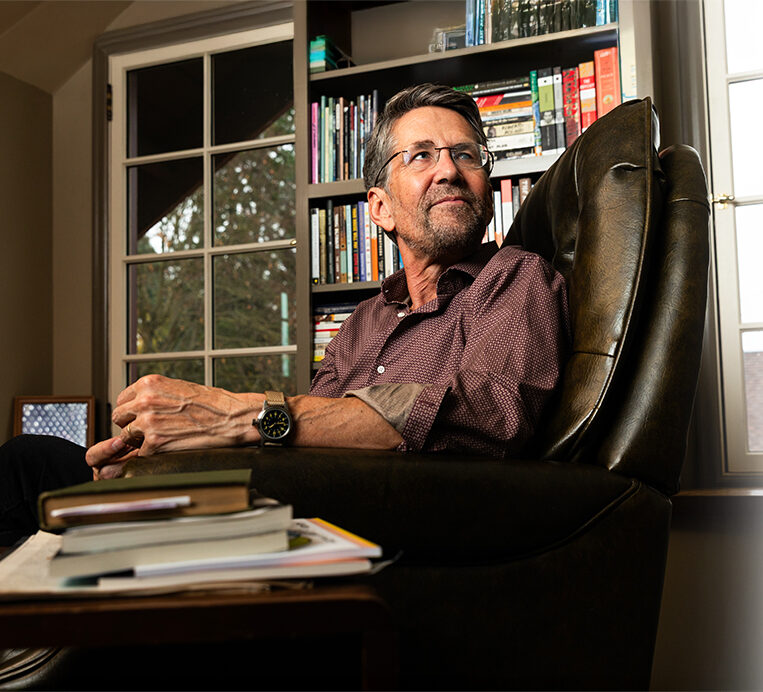
The white, clapboard building stood sealed and preserved from nearly a century of harsh, snowy winters. With its bell tower and separate boys-and-girls entrances, the 90-year-old schoolhouse had quietly outlived many of its students, becoming little more than a remote landmark for hunters and a windbreak for rabbits. But all that changed just this summer when Miller, professor of education at Eastern, succeeded in fulfilling a dream to establish an original one-room schoolhouse on campus as a testament to Eastern's rich heritage as the state's premier teacher's college.
"It was in wonderful shape when we found it," says Miller, who began his own career 50 years ago teaching in a two-room school. "They had sealed everything. We even found old lesson plans from the teacher. The historic significance of the one-room schoolhouse in building a democracy is a legacy that I had hoped to pass on to future teachers. It symbolizes our heritage of providing education for all citizens." His dream came true in August, when Eastern and a key sponsor- Spokane Teachers Credit Union- brought the former Jore School of Pend Oreille County to campus. Now positioned in the heart of the Cheney campus right across from Williamson Hall, home of the education department, the "Cheney Normal School Heritage Center" will be used as a museum, a seminar and reception hall- and a unique place to remind future students and teachers of the challenges and accomplishments of educators. A similar effort was launched in 1961 by the late Donald Patterson, then president of Eastern. But the university was unable to find a suitable schoolhouse for the campus. Behind the current effort is Miller, who has given more than 30 years of his life to Eastern and who has helped train 10,000 teachers over a half century. With the support of his wife, Carolyn, Miller spent years searching for a one-room schoolhouse that he might bring to campus. The couple scoured dozens of sites and covered thousands of miles of Washington in what became their regular "Sunday drives." Several one-room schoolhouses still stand in Washington, but Miller found that most were owned by sentimental families who didn't want to part with the buildings where their grandparents or other relatives were educated. Other schoolhouses have become victims of time and weather, decayed beyond repair. Three years ago, Miller thought he had found the perfect schoolhouse for the university project near Rosalia, but the building burned down. "All that was left was this," Miller says, pulling a charred doorknob from his archives on one-room schoolhouses. Miller was surprised to see that someone had added a steep metal roof years ago to keep the wet snow from buckling the structure. The building apparently had been used to store grain for a farmer, as the doors and windows of the school were tightly sealed, prohibiting vandals and animals from destroying the interior. And, incredibly, the entire building had been placed on a concrete slab, protecting the foundation from rot. Land records indicated that the schoolhouse, which began its service as the Jore School in the early 1920s, might have been built for the nearby community of Scotia and later relocated, says Dr. Charles Mutschler, archivist for Eastern libraries, though this has yet to be established for certain. Miller's plans to bring the schoolhouse to campus were enthusiastically embraced by EWU President Stephen Jordan, a former administrator in Kansas, where one-room schoolhouses were numerous. Coaxing associate vice president Michael Irish to join him, Jordan crashed through the woods with Miller on an expedition to examine the professor's hidden discovery. "We've got to get this," Jordan said when he saw the one-room schoolhouse. "This is an essential part of the history of education in the Inland Northwest." Everyone agreed that Miller had found the right school. The problem was how to pay for it and move it 50 miles to Cheney! Irish estimated that the initial cost would exceed $120,000. Only a miracle could produce that kind of money in time to move it before the coming winter.
The second miracle came when Judy Rogers, director of development for the EWU College of Education and Human Development, approached Spokane Teacher's Credit Union about making a donation to the university. Miller's one-room schoolhouse project struck a chord with the credit union, whose own roots go back to 1934 when its first branch opened at Lewis and Clark High School in Spokane. STCU, a not-for-profit organization of 68,000 members, stunned Eastern with a pledge to foot 50 percent of the bill to move and restore the schoolhouse! "The decision was pretty easy," says Steve Dahlstrom, president and chief executive officer of STCU, which has six branch locations including one in Newport. "Eastern trains the teachers that we finance with our loans and protect with insured savings accounts. Because so many of our members have earned their degrees from the university, it only made sense for us to sponsor the Cheney Normal School Heritage Center a symbol of Eastern's world-class education program." Also jumping on board was Gary Geschke, a Cheney businessman who generously arranged for the schoolhouse to be moved to its site on campus.
The one-room schoolhouse was a common sight during the development of the western United States. President Thomas Jefferson had set aside land in every township for a school. Many rural areas had just enough students and funds to support a one-room schoolhouse, where children from kindergarten through eighth grade studied until their communities began to establish larger primary and secondary schools. As the former Cheney Normal School, a place where teaching certificates were offered, Eastern itself had operated a one-room schoolhouse along the intra-urban line between Cheney and Spokane. The school was part of Eastern's "Rural Training Program," which equipped teachers for the unique challenge of educating children of diverse ages and abilities under one roof. Since that time, Eastern has educated thousands of teachers, staffing schools throughout the Inland Northwest with Eastern grads. The Jore School was a typical one-room schoolhouse structure, Miller said. It was built with separate doors for boys and girls, where the students would enter a cloakroom to change clothes before entering the classroom or going outside. A school bell mounted on the roof called students to class and a two-seater outhouse served as the public restroom. The entire structure is just 20 by 40 feet, smaller than some people's living rooms. "It's a romantic notion," says Miller, with a twinkle in his eyes as he recalls the development of education from the one-room schoolhouse to today's distance learning via computer. "I've always been interested in the history of education, and the one-room schoolhouse is where a lot of history in this country was made." He recalls his own start teaching in a two-room schoolhouse in Ironside, Oregon 70 miles up a mountain from Ontario as an assignment he sought out because of his fascination with the one-room schoolhouse described by Mark Twain in his story of Huck Finn. It's an attraction he's sure he will never outlive. It's an attraction that now lives again on the campus of Eastern Washington University. If you have
any age-appropriate memorabilia that you would like to donate for Eastern's
one-room schoolhouse or if you would like to help with costs of restoring
the structure, please contact Judy Rogers at (509) 359-6963 or by e-mail:
jrogers3@mail.ewu.edu.
|
||||||||||||||
| Creative Writing | ||||||||||||||
| Cool Under Fire | ||||||||||||||
| Issue Highlights | ||||||||||||||
| Mall Talk | ||||||||||||||
| Sports | ||||||||||||||
| Class Notes | ||||||||||||||
| Then & Now | ||||||||||||||
| Bookstore | ||||||||||||||
| In Memoriam | ||||||||||||||
| Letter to Editor | ||||||||||||||
| Guestbook | ||||||||||||||
| Archives | ||||||||||||||
| Alumni Calendar | ||||||||||||||
| Address Update | ||||||||||||||
| Credits | ||||||||||||||
| Alumni Home | ||||||||||||||
| Foundation | ||||||||||||||
| Contact Us | ||||||||||||||