A Future Beyond the Fields
For more than two decades, Eastern’s CAMP program gave the children of migrant parents a better shot at obtaining a college education. When budget cuts threatened to close its doors, donors stepped up.
By Linn Parish
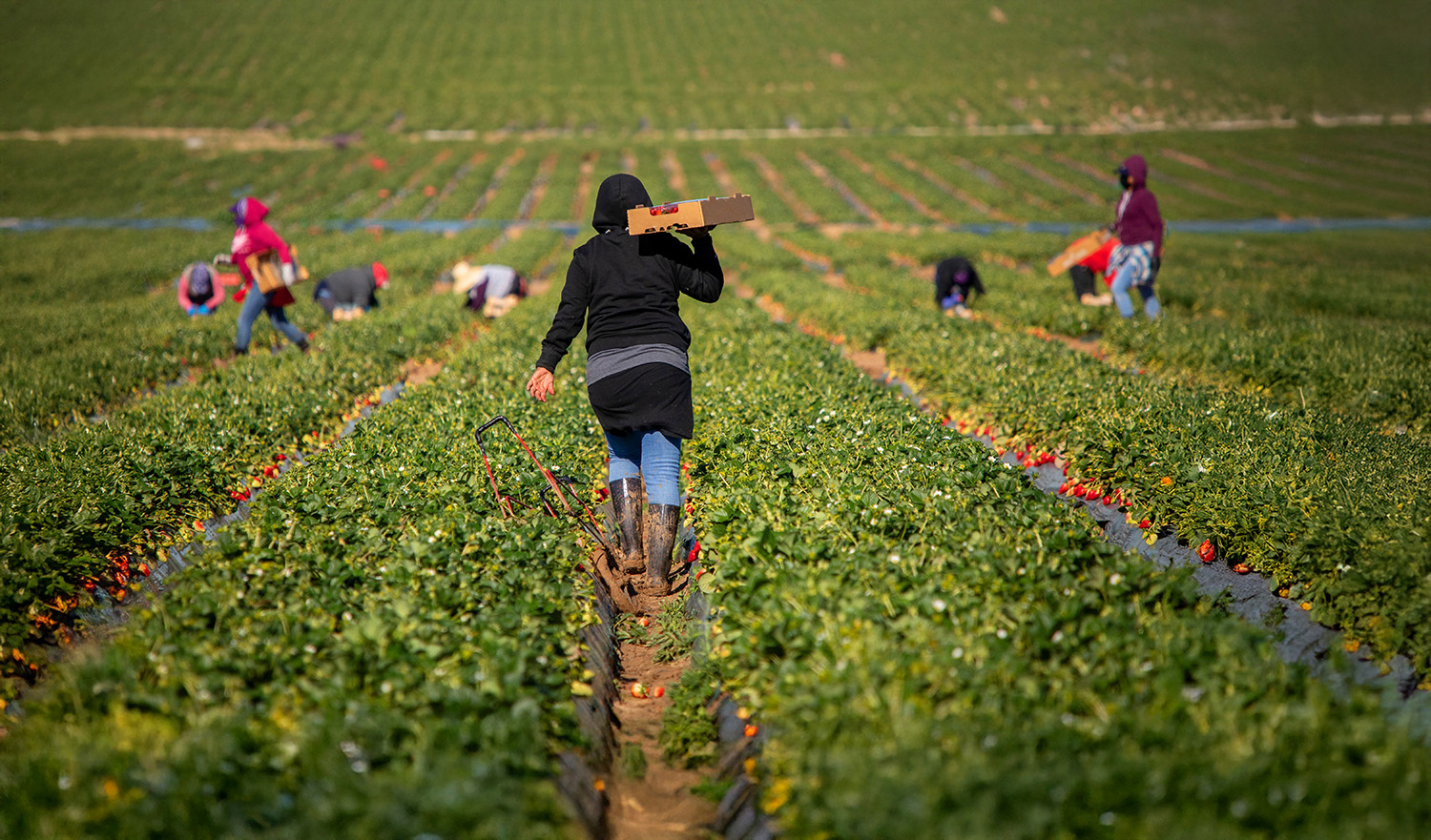
During long, hot summers back in the late 2000s, Tanya Núñez would spend 10 to 12 hours a day harvesting crops in the fields of central Washington.
A high schooler at the time, those sweaty days harvesting corn, onion and cabbage suggested to Tanya that maybe a career different from her parents would be best. “I remember telling myself, ‘I can’t do this for the rest of my life,’” Núñez ’12 says. “It was a rude awakening: You need to go to college, and you need to study.” That epiphany led her to Eastern Washington University and its CAMP program in 2008.
CAMP stands for College Assistance Migrant Program. The program got its start back in 1972, developed by the federal Office of Economic Opportunity to support migrant students in college. It was transferred to the Department of Education in 1980.
Eastern’s participation began 23 years ago, and, in the years since, the program has provided crucial support services for first-generation Eagles from migrant families. The goal? Helping students succeed in their studies and, ultimately, earn a degree.
Tanya met all of the criteria for CAMP. Her father, who was born in Mexico, and her American mother have spent most of their working lives in farm fields, much of that time moving from harvest to harvest before settling in Othello, Washington.
While Tanya is in the first generation of the Núñez family to attend college, she’s not the first of her siblings to attend EWU, nor is she the first to benefit from CAMP. She was preceded at Eastern by her sister, Jennifer, and her brother, Ricky. For the Núñezes, CAMP is thus a family affair, though they’ve all taken different paths to the program.
Jennifer is the oldest of the Núñez children. Nine years her sister’s senior, she came to EWU before CAMP was established. She says she was drawn to the university because it was located in Cheney, a town somewhat similar in size to Othello and an ideal distance from family.
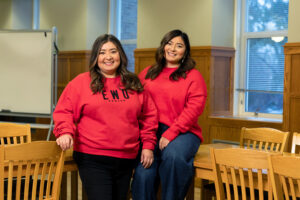
Though her matriculation predated CAMP, she says she found a great deal of support in Eastern’s Chicano/a/x Studies program, especially with the late professor Carlos Maldonado serving as a mentor.
By the time Jennifer ’05, ’18 graduated, Eastern’s CAMP program was up and running, a development that benefitted Jennifer and Tanya’s brother Ricky. He was already a CAMP veteran, having participated in Columbia Basin College’s program before he transferred to EWU. (He now works as a real estate agent in Othello.)
Having two older Eagles in the family meant Tanya received lots of sound advice about Eastern. Both siblings urged her to take advantage of what CAMP had to offer.
“I remember my sister said, ‘I want you to focus on college and not have the struggles that I had as the first-generation,” Tanya recalls. “And I never understood that, right? But as I’m older now, I’m able to reflect and be appreciative of the opportunities that I was able to have with Eastern, especially as part of CAMP.”
Tanya pursued a couple of different degree programs before committing to social work. Despite this circuitous path to her major, she graduated in four years, went on to earn a master’s degree at Walla Walla University, and is now working in her chosen field as a clinical manager at Renew Behavioral Health & Wellness in Moses Lake.
“I love Eastern. I love the opportunities and the network it provided for me,” she says. “It felt like a home away from home.”
The Núñez siblings’ time in CAMP didn’t end when Tanya graduated from the program. Jennifer had served as an adviser and recruiter for the Chicano/a/x Studies program from 2005 to 2009, eventually serving as its coordinator. During her tenure with the program, she worked closely with CAMP, often referring students who came from families of migrant workers to the program.
“I love Eastern. I love the opportunities and the network it provided for me,” she says. “It felt like a home away from home.”
Federal funding for EWU’s CAMP program has ebbed and flowed through the years, and in the early 2010s, the program for a time lost its revenue source. When that funding was restored in 2014, Jennifer became the director. She held that position until 2019.
“I very much related to the challenges students faced when transitioning from their high school communities to higher ed,” says Jennifer, who currently serves as director for dual/concurrent enrollment and summer sessions with EWU’s Running Start and College in the High School programs.
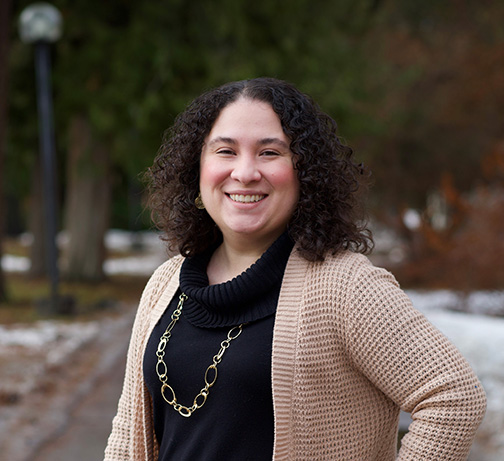
Like Jennifer Núñez, Rocío Rangel, EWU’s current CAMP director, grew up in a migrant family. A Texas native, Rangel was a benefactor of one of the longest running CAMP programs in the United States, which started at St. Edwards University, a small private school in Austin, Texas.
Initially, Rangel says, she was reluctant to go into CAMP, because she didn’t want to be stereotyped with a “migrant” label. “It wasn’t a good thing in high school,” Rangel says. “When certain teachers saw my peers going into a migrant meeting, they would treat them differently. And then I got to college and realized none of that mattered.”
Through the years, she says, the word “migrant” has been politicized and frequently is lumped in with “immigrant.” But a migrant worker simply is someone who travels from one place to another for seasonal work, she says. While it frequently describes agricultural workers, the term technically applies to workers in a host of other industries.
Migrant workers Rangel adds, are predominantly, but not exclusively, of Latino descent —one in five are from other backgrounds. By extension, participants in CAMP are predominately of Latino descent, but the program isn’t specifically for Latinos.
Rangel points out students from migrant families face challenges when moving from one state to another during an academic year. School districts in different states frequently have different curricula, which can lead to a loss of credits. Often, those students must take make-up classes during the summer months.
For those who reach college there can be significant barriers, among them financial instability, cultural and language hurdles, and a lack of familial or institutional support. CAMP at EWU provides one-on-one counseling, financial assistance, and a series of social events meant to help mitigate these potential obstacles to success.
“This is a community away from your community to make sure that you feel like you have a sense of place,” she says.
Jennifer Núñez says the program also can help those students deal with issues that go deeper than just homesickness. “A lot of migrant students are providers for their own households and help them to make ends meet,” Núñez says. “And so I think there’s a lot of guilt behind leaving that community and not being able to provide that day-to-day support.”
At EWU, up to 40 incoming freshmen enter the program each fall. Each receives a modest, $500 quarterly stipend, in addition to specialized advising, registration assistance, peer mentoring, student leadership skills training and other benefits. The hope is that more than 80 percent of CAMP participants have a successful first year, defined as earning 36 credits with at least a 2.0 grade-point average. Another goal is that some 90 percent of the students move on to their sophomore year. “That’s a high percentage,” Rangel says, “and we reach it every time.”
Despite this track record of success, and what would appear to be an indisputably positive return on taxpayer investment, securing federal funding for CAMP has at times been elusive. Back in the 1990s, for example, the Clinton Administration at one point sought to zero out CAMP’s budget. An uproar ensued, and Congress acted to ensure the program remained solvent.
A more recent challenge has come from the current administration, which has called for an end to the program. The White House has also effectively frozen funding already appropriated by Congress, a move that has plunged the nation’s CAMP programs into crisis.
CAMP receives federal funding commitments in five-year cycles. EWU’s funding ended this year, and the U.S. Department of Education announced it wouldn’t be holding a competition for renewals. Other universities throughout the U.S., having no funding alternative, were forced to shutter their programs. Here in the Inland Northwest, the University of Idaho announced it would close its CAMP program.
Fortunately, Eastern donors have stepped up to help. Most crucially, the university announced earlier this year that it had secured a five-year, $2.1 million commitment from the Krumble Foundation — funds which will allow EWU to both sustain and expand CAMP. One goal is to provide more services to CAMP participants during their sophomore years, an initiative meant to ensure that even more participants graduate.
CAMP already has a rolling six-year graduation rate of about 60 percent, which is typically 15 to 20 percentage points higher than the university as a whole. CAMP and foundation leaders share the goal of further improving that rate.
The Krumble Foundation, founded by Burke and Muriel Blevins after the couple sold Spokane Valley-based manufacturer VPI Quality Windows Inc., is dedicated to addressing the need for more skilled workers in the Inland Northwest by providing post-secondary education opportunities for people from disadvantaged backgrounds. The foundation has in the past made seven-figure contributions to EWU scholarship programs. The move to dedicate resources to CAMP represents an expansion of its philanthropy.
Last September, Burke Blevins explained the rationale to a Spokesman-Review reporter. “For our region to be economically viable, we need an institution that provides a high-quality education at as reasonable costs as possible …” he said. “That’s why Eastern is really essential to the Spokane region. And this is a program that’s aimed at the kind of people that really drive our economy; those who are going to college, the first generation in their family, and making socioeconomic movements for generations to come.”
It’s unclear when or if the federal funding will return. Regardless, EWU’s program is secure for the near future. That’s good news for Rangel, her staff and their students. What’s more, she says, “all of the goals from the Krumble Foundation are aligned with what we already want to do”.
While Jennifer Núñez hasn’t been involved directly with CAMP for a number of years, she’s also relieved that it is surviving and thriving.
“Being able to see the students, so timid their first year, go on to graduate and then, in most cases, move on from that goal to something bigger… it’s just so nice,” she says. “And I think that’s definitely because of the help from CAMP — the resources, the staff and the mission — that has given them the start they need to accomplish their goals.”
More to the Story: Rangel Honored for Distinguished Service
Rocío Rangel, CAMP’s director, recently received Eastern’s 2025 Distinguished Service Award — recognition of her leadership, innovation and commitment to student success.
Rangel has led the CAMP program for the past four years. During her tenure, she has both improved financial efficiencies while enhancing services for the first-generation and migrant students who depend on the program, the award citation said.
Among her other notable successes, Rangel introduced an innovative staffing model that replaced a recruiter position with a second advisor, allowing for more direct student engagement and improved program outcomes. The change streamlined operations and strengthened the program’s capacity to serve students more effectively.
Her emphasis on communication, meanwhile, has led to dramatic reductions in students-facing financial holds during registration. Rangel made this happen by creating bilingual outreach materials and a communications plan that ensures students clearly understand financial aid processes and deadlines.
Rangel and her staff have also emphasized supporting and building relationships with Spanish-speaking parents, helping them manage delays and tech issues to maintain a 100% financial aid submission rate among the program’s first-year students — something the team has accomplished every year since 2020.