On the Edge: Living the Anthropocene Natalie Niblack and Ann Chadwick Reid

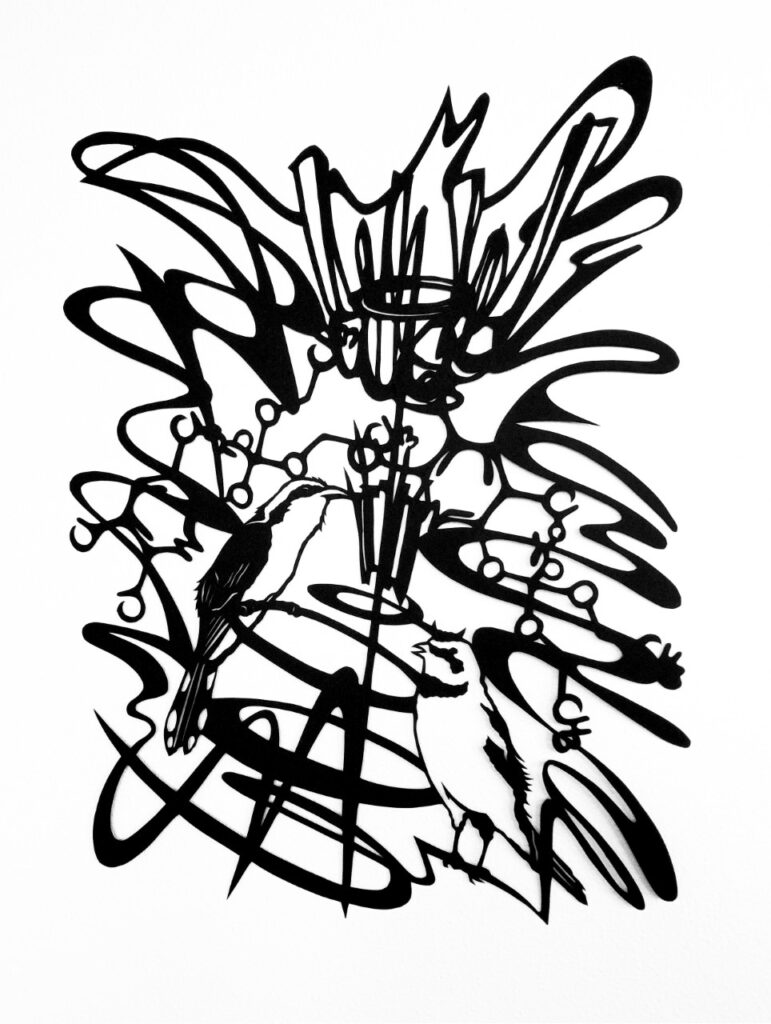
Ann Chadwick Reid | A Yellow Billed Cuckoo and Horned Lark Lament Cell Phone Towers and Chlorpyrifos | Hand cut Arches | 2018

EWU Gallery of Art Presents

On the Edge: Living the Anthropocene
Natalie Niblack and Ann Chadwick Reid

Nov. 16th, 2021 – Jan. 13th, 2022

EWU Art Building

Admission is free

Gallery Hours: Monday – Friday 9am to 6pm
Closed Weekends, Holidays, and for Spring Break March 23-27, 2022.

Artist Website:

Natalie Niblack: https://www.natalieniblack.com/

Ann Chadwick Reid: https://annchadwickreid.com/


Opening Reception and Lecture | Thursday, November 16th, Noon

Natalie Niblack and Ann Chadwick Reid will be giving a lecture about their work on November 16th at noon with reception to follow.

Location: Eastern Washington University Gallery of Art is located in the Art Building situated in the center of the fine and performing arts complex on the EWU campus in Cheney, Washington.

Hours: Gallery hours are Monday through Friday 9am to 6pm and closed weekends, holidays and for spring break March 23-27, 2022.

Admission is free

On the Edge: Living the Anthropocene

The artwork of Northwest artists Ann Chadwick Reid and Natalie Niblack recognizes the impact of climate change on marine and forest environments of the Pacific Northwest.
Using traditional media of cut paper, painting, prints and drawings, both artists create work that celebrates the social and environmental complexity of this Northwest landscape
while questioning it’s survivability as climate change inevitably and perhaps irrevocably alters the world around us. Ann Chadwick Reid’s work addresses the impact of human activities on whole ecosystems and individual species using the traditional media of hand- cut black paper. Her elegant black and white designs make a striking contrast to Natalie Niblack’s color-intense oil paintings and large-scale drawings of pipeline and oil train explosions, plastic debris and imperiled bird species. Together these artists ask the viewer to consider the magnitude of the crisis.

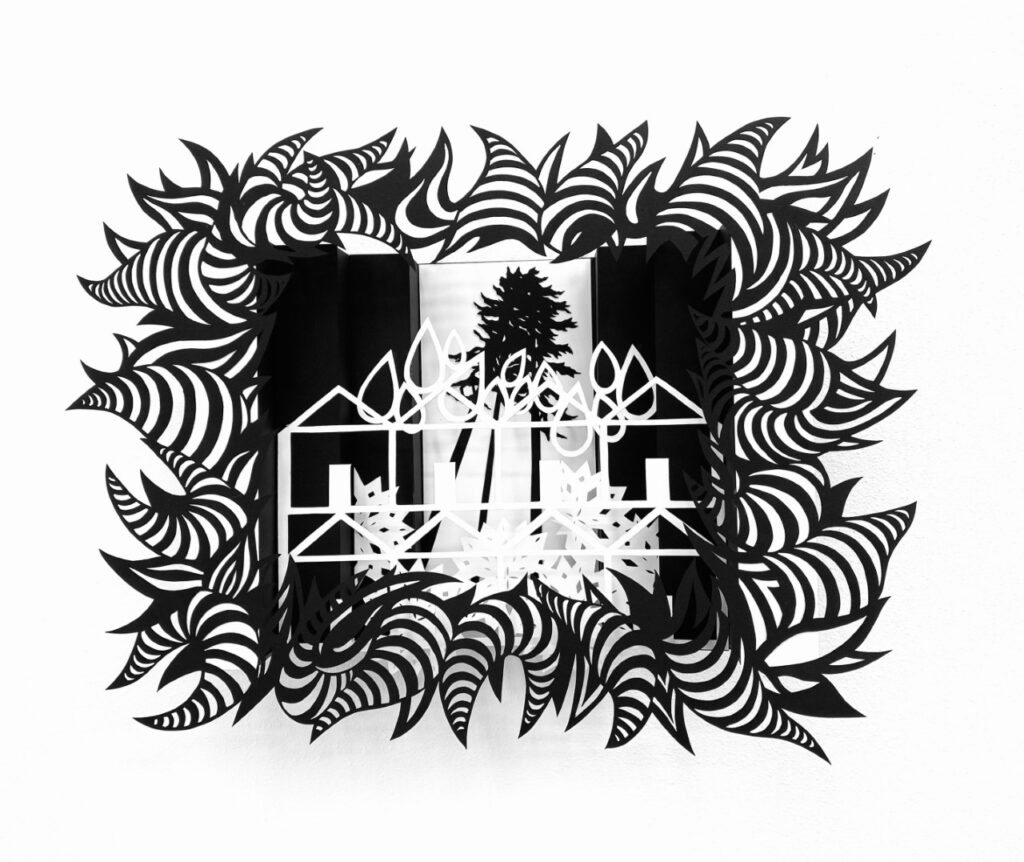
Ann Chadwick Reid | Climate Change Story:Fire | Hand cut Arches | 19" x 14" x 5.5" | 2021

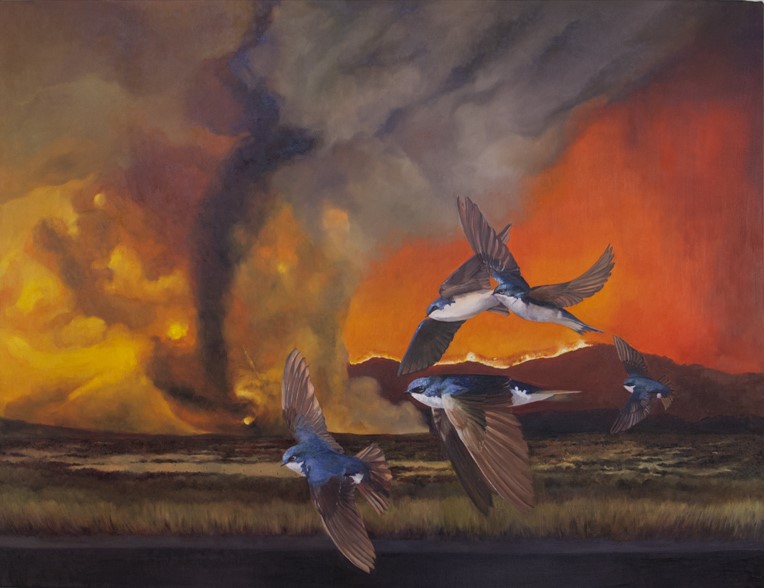
Natalie Niblack | Migration: Tree Swallow | Oil on Linen | 34" x 44" | 2021

Natalie Niblack and Ann Chadwick Reid

Artist Bio

Natalie Niblack: Natalie Niblack is a full-time visual artist based in the Mt. Vernon, WA. She received an MFA
from the Edinburgh College of Art in 1993. She was an instructor of painting, drawing and printmaking as Shoreline Community College from 1996 to 2016. She has shown her work across the US in solo exhibitions, group shows and juried exhibitions. Natalie’s work is part of numerous permanent collections including the National Museum of Women in the Arts, Washington State Art in Public Places and the Museum of Northwest Art. A full list of her
exhibitions and accolades can be found on her attached CV or on her website.

Visit her website: https://www.natalieniblack.com/

Ann Chadwick Reid:  Ann Chadwick Reid is a full-time visual artist based on Samish Island, WA. She was an Instructor of Art at Skagit Valley College from 1986 to 2008. She has shown her work in solo and group exhibitions across West including exhibitions at College of the Redwoods,
Eureka Ca, Shoreline Community College, Shoreline, WA and Chase Gallery, Spokane, WA. She is in several permanent collections including King County Public Art Collection. A full list of her exhibitions, publications and accolades can be found on her attached CV or on her website.

Visit her website: https://annchadwickreid.com/

Both artists live and work in Skagit Valley, a rural, agricultural community framed by the Cascade Mountains to the East and the Salish Sea to the west. This once pristine
landscape faces environmental challenges which inspire the imagery and content of their artwork. A railway for oil and coal crisscrosses the region heading to two major oil
and coal refineries threatening pipeline explosions and oil spills. Unregulated development erases forestland and recreation tramples precious habitat while farming
contributes toxic chemicals and humans pollute waterways. It is the intent of the artists to draw the viewer into the work by identifying the beauty that is inherent in both the
destruction of and revelation of nature. These artists create works that call upon viewers to recognize the far-reaching threats of climate change to our planet and participate in
preventing the decline of our natural world.
More About the Gallery

Learn more about our upcoming exhibitions and what we have shown in the past.