Bachelor of Science in Biology

Study the Science of Life

With a Bachelor of Science in Biology from EWU, you’ll develop a deep understanding of key concepts in evolution, genetics, anatomy, ecology, botany, and zoology—allowing you to explore the interconnectedness of all life forms. 

The EWU Biology program is also designed to give you real-world opportunities to do biology. As an undergrad, you’ll engage in hands-on learning through lab work and fieldwork.

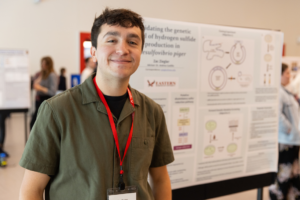
You’ll have opportunities to conduct independent research projects, collaborate with faculty, and present your findings at national and regional scientific conferences, such as EWU’s annual Student Research and Creative Works Symposium.

This immersive experience sharpens your investigative and critical-thinking skills, setting you up for success in your future job or graduate studies.

Whether you’re interested in plant sciences, healthcare, research, conservation, or education, this degree program gives you a solid foundation in biology, plus the flexibility to choose elective courses that align with your passions and career goals. 

Request Info Curriculum & Requirements

Why Study at the Region's Polytechnic?

Get a hands-on education, real-world experience, and personalized support from faculty so you can launch your career with confidence.


Research Opportunities

Research Opportunities

Lead independent research projects and present your findings at scientific conferences.

State-of-the-Art Facilities

State-of-the-Art Facilities

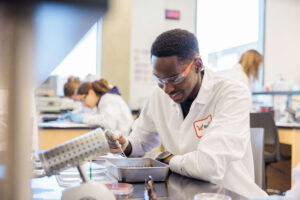
Access modern labs and equipment that prepare you for real-world challenges.

Career Connections

Career Connections

Network with industry leaders and alumni thriving in diverse biological sciences fields.

Applied Learning

Applied Learning

Engage in fieldwork, internships, and research projects that bring biology to life.

Explore Our Facilities

Expert Faculty

Expert Faculty

Learn from experienced professors passionate about teaching and research.

Meet Our Faculty

Where Our Graduates Work

  • Environmental Protection Agency (EPA)
  • Providence Health & Services
  • Pacific Northwest National Laboratory
  • Washington Department of Fish and Wildlife
  • Leading biotechnology and pharmaceutical companies
"Whether you’re interested in fisheries, looking at plants, soils, or mammalian life evolution, there’s a professor here doing research that would be within your interests." — Rachel Pentico '21

Student Stories

What You'll Learn

The following information comes from the official EWU catalog, which outlines all degree requirements and serves as the guide to earning a degree. Courses are designed to provide a well-rounded and versatile degree, covering a wide range of subject areas.

Biology Major, Bachelor of Science (BS)

Graduation Requirements: Complete the Educational Testing Service (ETS) Major Field Test for Biology.

Review the Biology Department website for additional information about advising tracks including Pre-Veterinary medicine, Pre-Pharmacy, and many others.

Grade Requirements: a cumulative GPA ≥2.0 for all courses in student’s curriculum in Biology.

Required Biology Courses
BIOL 171
171L
BIOLOGY I
and BIOLOGY I LAB
5
BIOL 172
172L
BIOLOGY II
and BIOLOGY II LAB
5
BIOL 173
173L
BIOLOGY III
and BIOLOGY III LAB
5
BIOL 270
270L
BIOLOGICAL INVESTIGATION
and BIOLOGICAL INVESTIGATION LAB
3
BIOL 310FUNDAMENTALS OF GENETICS5
Choose one of the following
BIOL 301
301L
MICROBIOLOGY
and MICROBIOLOGY LAB
5
or BIOL 302
302L
BOTANY
and BOTANY LAB
or BIOL 303
303L
INVERTEBRATE ZOOLOGY
and INVERTEBRATE ZOOLOGY LAB
or BIOL 304
304L
VERTEBRATE ZOOLOGY
and VERTEBRATE ZOOLOGY LAB
Choose one of the following
BIOL 423EVOLUTION4-5
or BIOL 440 ECOLOGY
Choose one of the following
BIOL 436CELL BIOLOGY5
or BIOL 438 MOLECULAR BIOLOGY
Choose one of the following
BIOL 334
334L
HUMAN ANATOMY AND PHYSIOLOGY III
and HUMAN ANATOMY AND PHYSIOLOGY III LAB
4-5
or BIOL 351 PRINCIPLES OF ANIMAL PHYSIOLOGY
or BIOL 352 PRINCIPLES OF PLANT PHYSIOLOGY
or BIOL 353 PRINCIPLES OF MICROBIAL PHYSIOLOGY
Required Supporting Courses
BIOL 380DATA ANALYSIS FOR BIOLOGISTS5
or MATH 161 CALCULUS I
or MATH 380 ELEMENTARY PROBABILITY AND STATISTICS
CHEM 171
171L
CHEM 172
CHEM 172L
CHEM 173
CHEM 173L
GENERAL CHEMISTRY I
and GENERAL CHEMISTRY LABORATORY I
and GENERAL CHEMISTRY II
and GENERAL CHEMISTRY LABORATORY II
and GENERAL CHEMISTRY III
and GENERAL CHEMISTRY LABORATORY III
15
Electives–21 of 36 credits must be in Biology, non-Biology electives must be approved by faculty advisor.36
Required Senior Capstone
BIOL 490
490L
SENIOR CAPSTONE
and SENIOR CAPSTONE LAB
5
Total Credits102-104

The following plan of study is for a student with zero credits. Individual students may have different factors such as: credit through transfer work, Advanced Placement, Running Start, or any other type of college-level coursework that requires an individual plan.

Courses could be offered in different terms, checking the academic schedule is paramount in keeping an individual plan current. Students should connect with an advisor to ensure they are on track to graduate.

All Undergraduate students are required to meet the Undergraduate Degree Requirements.

First Year
Fall QuarterCreditsWinter QuarterCreditsSpring QuarterCredits
BIOL 171
171L
5BIOL 172
172L
5BIOL 173
173L
5
CHEM 171
171L (Natural Science BACR 1)
5CHEM 172
172L (Natural Science BACR 2)
5BIOL 270
270L
3
ENGL 1015ENGL 2015CHEM 173
173L
5
  Elective - minor or general elective2
 15 15 15
Second Year
Fall QuarterCreditsWinter QuarterCreditsSpring QuarterCredits
BIOL 301
301L (or BIOL 302 & BIOL 302L, BIOL 303 & BIOL 303L, BIOL 304 & 304L)
5BIOL 3105BIOL 436 or 4385
BIOL 380, MATH 161, or MATH 3805BIOL 423 or 4404-5Biology Elective24
Diversity - graduation requirement15Global Studies - graduation requirement15Humanities & Arts BACR 115
  Elective - minor or general elective2
 15 14-15 16
Third Year
Fall QuarterCreditsWinter QuarterCreditsSpring QuarterCredits
BIOL 334
334L (or BIOL 351, BIOL 352, BIOL 353)
5Biology Elective24Biology Elective24
Biology Elective24Biology Elective24Social Science BACR 215
Humanities & Arts BACR 215Social Science BACR 115Elective - minor or general elective5
Elective - minor or general elective1Elective - minor or general elective2Elective - minor or general elective1
 15 15 15
Fourth Year
Fall QuarterCreditsWinter QuarterCreditsSpring QuarterCredits
Biology Elective24Biology Elective24BIOL 490
490L (Senior Capstone - graduation requirement)
5
Biology Elective 24Elective - minor or general elective5Elective - minor or general elective5
Biology Elective24Elective - minor or general elective5Elective - minor or general elective5
Elective - minor or general elective3Elective - minor or general elective1 
 15 15 15
Total Credits 180-181
1

University Graduation Requirements (UGR) and Breadth Area Course Requirements (BACR) courses may be less than 5 credits and additional credits may be required to reach the required 180 total credits needed to graduate.  Students should connect with an advisor to ensure they are on track to graduate.

2

Electives – 21 of 36 credits must be in Biology, non-Biology electives must be approved by faculty advisor.

Applied Learning Opportunities

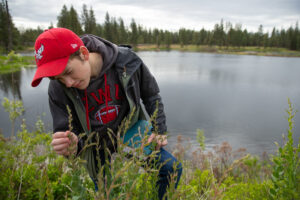
Student studying a plant

  • Applied Laboratory Work: Build practical, career-ready skills by working in labs that mirror professional lab environments.
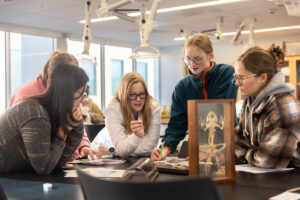
  • Classroom-Based Applied Learning/Simulation: Practice real-world decision-making through simulations, case studies, role playing, and other hands-on activities in the classroom.
  • Community-Based Projects: Team up with local organizations on projects that allow you to solve problems and make a difference.
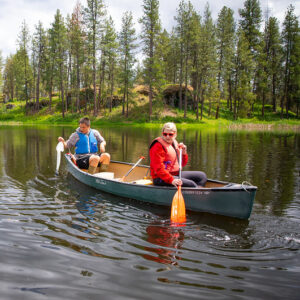
  • Field Work: Take your learning outside the classroom to research sites like wildlife refuges or field camps.
  • Internships: Get real-world experience (and often credit or pay) by working in a professional setting connected to your career goals.
  • Service-Learning Experiences: Work on critical issues—such as food security, poverty, or climate change—that connect community service with what you’re learning in class.
  • Student Employment & Leadership at EWU: Gain skills, connections, and confidence through on-campus jobs and leadership roles in student government, departments, athletics, or clubs.
  • Study Abroad: Travel, learn, and experience new cultures while earning credit and building communication skills that help you thrive anywhere.
  • Undergraduate Research: Collaborate with professors on real-world research projects where you ask questions, solve problems, and present what you discover.
  • Volunteerism: Give back to your community while gaining experience, building connections, and seeing how you can apply your classroom knowledge to make an impact in the world.

Career Track Advising Suggestions


Plant Sciences

Pre-Chiropractic

Fisheries

Pre-Medical Laboratory Science

Optometry

  • Pre-optometry students should complete the Pre-Medical/Pre-Dentistry curriculum.
  • Joanna Joyner-Matos, PhD: jmatos@ewu.edu

Pharmacy

Physical Therapy

Physician Assistant

Veterinary Medicine

Wildlife Biology-Management

  • Wildlife Biology-Management
  • Charlotte Milling, PhD: cmilling@ewu.edu