Turnbull Laboratory
Learn Outdoors
Explore wetlands, forests, and grasslands while conducting research inside the Turnbull National Wildlife Refuge—just minutes from campus.
Do Research in the Wild
At the Turnbull Laboratory for Ecological Studies (TLES), you can follow your curiosity and conduct field research, work alongside faculty mentors, and gain hands-on experience that prepares you for your future career.
EWU is one of only three universities in the country with a research facility at a national wildlife refuge, giving undergraduate and graduate students rare opportunities to apply classroom learning in real-world settings.
What You'll Do at the Turnbull Lab

Gain Fieldwork Experience
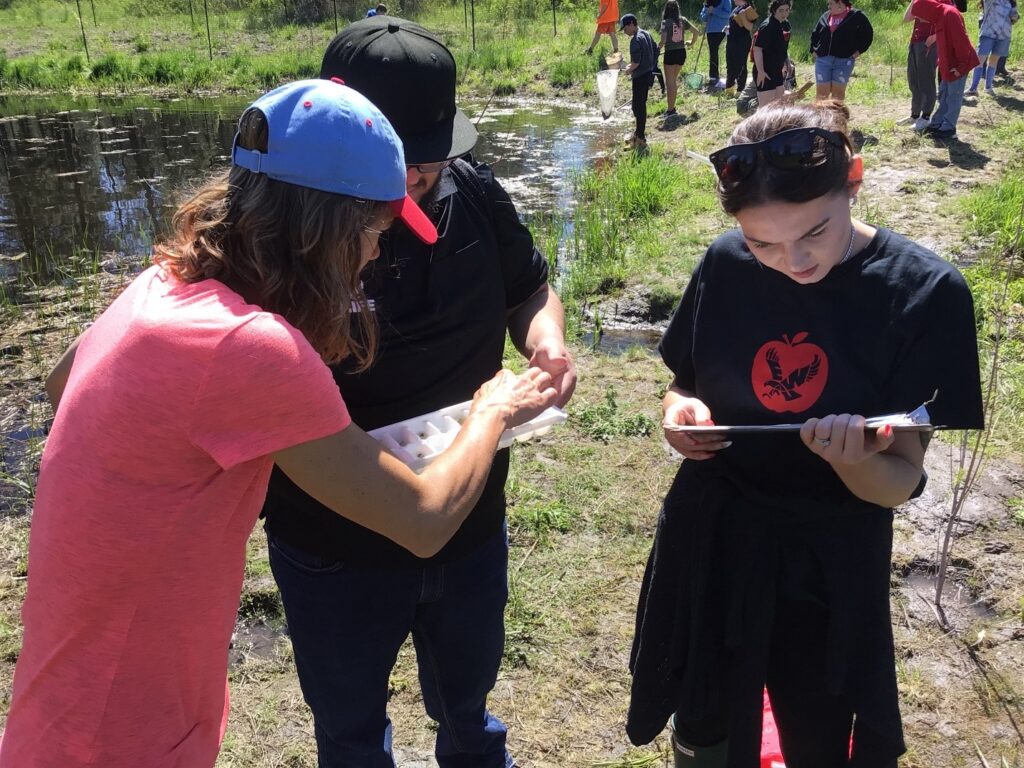
Collect and analyze samples, monitor wildlife and habitats, and participate in research that sharpen your investigative skills.

Work on Real-World Projects
Collaborate with classmates or spearhead your own research projects with mentorship from faculty.
Build Career-Ready Skills
Gain hands-on experience that helps you stand out when applying for jobs or graduate school programs.
Take Your Learning Outside the Classroom
Students across multiple majors use the Turnbull National Wildlife Refuge as an outdoor classroom and research site, including:
- Biology
- Environmental Science
- Geosciences
- Education
"You can be in class one minute and 10 minutes later be out in the middle of the refuge where there are hundreds of different birds and other wildlife. Once I started going [to Turnbull], I realized how powerful that access really is. It's like having a biology playground.” —Jeff Schell '25
23,000+
200+
10
Research in Action
At Turnbull, students and faculty investigate how climate change and other environmental challenges affect ecosystems, wildlife, and public health. From wildfire ecology to invasive species, research at the refuge helps shape conservation and management efforts throughout the region.
Wildfire & Forest Ecology
Researchers explore how fire and forest management influence ecosystems in the Inland Northwest.
Featured Projects
- Standing Dead Trees & Wildlife Habitat
Researchers study how standing dead trees support birds, bats, and other wildlife across the refuge. - Small Mammals & Timber Management
Students investigate how thinning and prescribed burns influence small mammal populations and biodiversity.
Wildlife & Habitat Monitoring
Students monitor birds, elk, and other wildlife to understand how species interact with changing climates and habitats.
Featured Projects
- Prairie Restoration & Invasive Species
Researchers examine how prescribed fire may help reduce invasive grasses and restore native prairie habitats. - Habitat Monitoring on Restored Lands
Students and faculty also work alongside the Upper Columbia United Tribes to monitor restoration projects on tribal and protected lands. - Elk Management & Aspen Forests
Students track elk movement patterns to understand how grazing affects aspen habitats and biodiversity.
Water Quality & Freshwater Systems
Students examine freshwater ecosystems and environmental health across wetlands, streams, and watersheds.
Featured Project
- Reed Canary Grass & Water Quality
Researchers investigate how invasive plants impact stream flows and groundwater quality throughout eastern Washington.
Public Health & Disease Ecology
Researchers explore how environmental conditions impact tick density, pathogens, and the spread of vector-borne diseases.
Featured Project
- Tick Populations & Disease Detection
Researchers study tick populations and test for bacteria linked to vector-borne illnesses.
An Impactful Partnership
For decades, EWU students have stepped beyond the classroom and into the landscapes of the Turnbull National Wildlife Refuge to explore, study, and better understand the natural world.
Established through a partnership with the U.S. Fish and Wildlife Service in 1975, the Turnbull Laboratory for Ecological Studies was created to give students immersive, hands-on learning experiences in a protected natural environment. Here, they learn how to ask scientific questions, conduct field studies, analyze data, and share their findings.
Located just minutes from campus, TLES gives students repeated opportunities to participate in fieldwork and research throughout their time at EWU, helping them build critical skills as they prepare for graduate study and careers in environmental and scientific fields.
The partnership also supports the refuge itself, with student and faculty research contributing to ongoing conservation efforts. Together, EWU and Turnbull advance research, education, and environmental stewardship in the Inland Northwest.