The Future of Chip Design
Featuring Dr. Claudio Talaric, Wed., Feb. 18, 2026
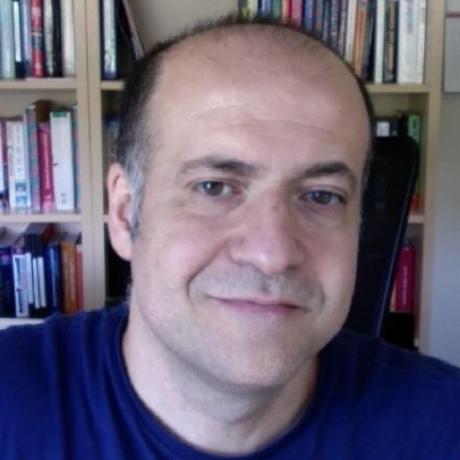
Distinguished Lecture by Dr. Claudio Talarico, Professor, Electrical and Computing Engineering, Gonzaga University
Wednesday, February 18, 2026 | 1:00 p.m. – 2:50 p.m.
Catalyst Building, 601 E Riverside Avenue, Room 202 — Spokane, WA 99202
The future of microchip design is being rewritten—and Spokane is the place to witness it.
Join us in the Catalyst Building for an exciting Distinguished Lecture on Chip Design featuring Dr. Claudio Talarico, a leading expert in semiconductor innovation and integrated circuit design.
Powered by the momentum of the U.S. CHIPS and Science Act, this talk will explore how open-source tools and emerging design methodologies are revolutionizing the way microelectronics chips are created. Dr. Talarico will reveal how these technologies are breaking down traditional barriers, expanding access to chip development, and helping close the workforce gap in the semiconductor and microelectronics industries.
Attendees will gain insight into cutting-edge, real-world approaches that make chip design more accessible, scalable, and innovative—opening new doors for students, engineers, researchers, startups, and industry professionals alike. This is a unique opportunity to learn how the next generation of microelectronics is being built.
Meet the Speaker: Dr. Claudio Talarico
Claudio Talarico received the B.S. and M.S. degrees in Electrical Engineering from the University of Genoa, Italy, and the Ph.D. degree in Electrical Engineering from the University of Hawai’i. He is currently a Professor of Electrical and Computer Engineering at Gonzaga University. Before joining Gonzaga University, he was with Eastern Washington University, the University of Arizona, and industry, where he held both engineering and management positions at Siemens Semiconductors, IKOS Systems, and Marconi Communications. His research focuses on the design of low-power, high-performance, and high-precision digital and mixed-signal integrated circuits and systems for a variety of applications, including wireless communication systems, non-invasive biomedical monitoring systems, and embedded systems-on-chip.
Over the last twelve years, his research activity has resulted in more than 40 peer-reviewed publications spanning a diverse range of areas, including wireless communications, biomedical circuits, and AI. In 2023–2024, he was the recipient of Gonzaga’s Faculty Award for Professional Contribution.

You might also like...


Find EWU faculty and staff who are experts in diverse subjects.