Eastern Students Present Research Findings at Gender Studies Symposium in Portland
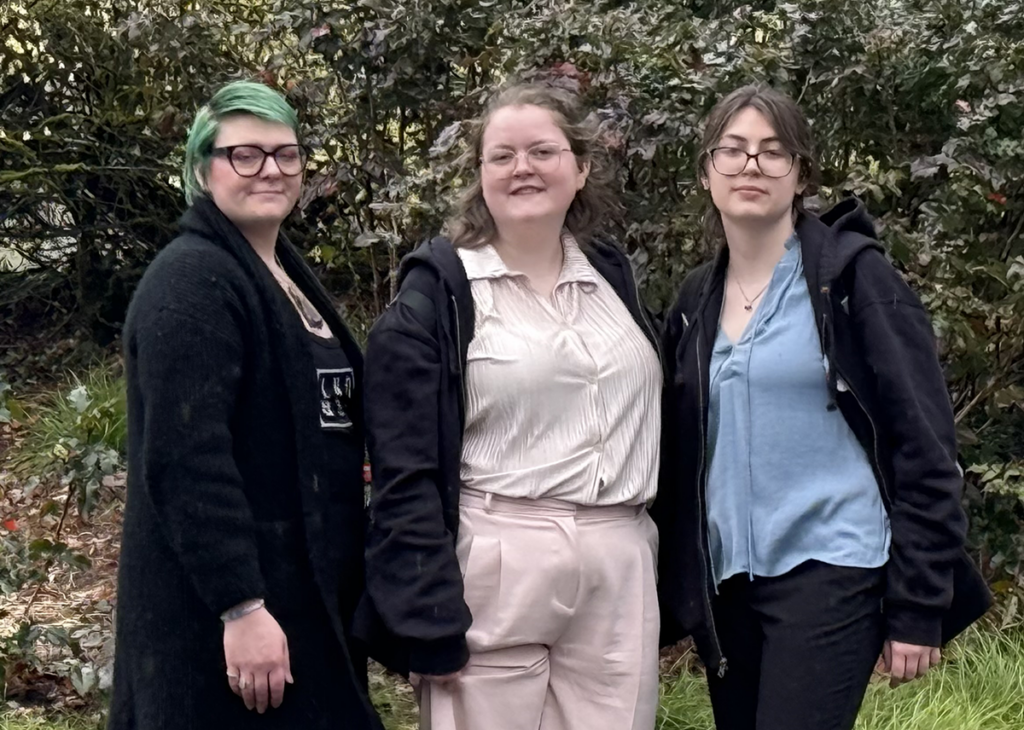
Earlier this spring, three students from EWU’s Gender, Women’s & Sexuality Studies program traveled to Portland, Oregon to deliver research presentations at the 45th Gender Studies Symposium, a nationally prominent gathering of scholars hosted by Lewis & Clark College.
The students, Annette Carpenter, Abby Jensen and Nancy Benson, each worked with GWSS faculty members to submit their work and secure funding in advance of earning presentation invitations from symposium organizers.
Organized by a committee of Lewis & Clark students with support from the college’s faculty and staff, the Gender Studies Symposium brings together representatives from academia, activism and the arts for three days of creative explorations of local, national, and global gender issues.
Carpenter’s presentation highlighted how recent federal policies have exacerbated deficiencies in mental health care for immigrants. She said the conference helped her make invaluable contacts with students and scholars from across the nation.
“I connected with many students and professionals from as close as Washington State University and as far as Appalachian State University,” Carpenter said. “I am so grateful to have been able to represent both my school and my department at such an important event. Without GWSS’s encouragement and support, I would have never been able to take advantage of such a wonderful opportunity.”
Jensen also said her experience at the symposium was nothing short of unforgettable. Her presentation, delivered in essay form, considered how the work of Annemarie Mol, an influential Dutch philosopher, might be deployed to question today’s interdisciplinary approaches to feminism.
“Being able to present at the Lewis & Clark Gender Studies Symposium was an absolute highlight of my undergraduate experience,” Jensen said. “Traveling, learning from other academics, and presenting on a panel was something I never dreamed of being able to do. It was an amazing experience.”
Benson emphasized that her contribution to the event, a workshop, was aimed at providing a space for “personal healing and collective resistance.” The response, she said, was gratifying for her and, perhaps more importantly, for workshop participants.
“It was incredibly rewarding to see participants embrace intuitive movement as a form of political defiance, successfully creating a shared space where joy served as a tangible tool for collective resilience and sustainable activism,” Benson said.
**Thank you to Judy Rohrer, associate professor of Gender, Women’s & Sexuality Studies (GWSS), for writing this story.


Find EWU faculty and staff who are experts in diverse subjects.