EWU to Offer Robotics Certifications
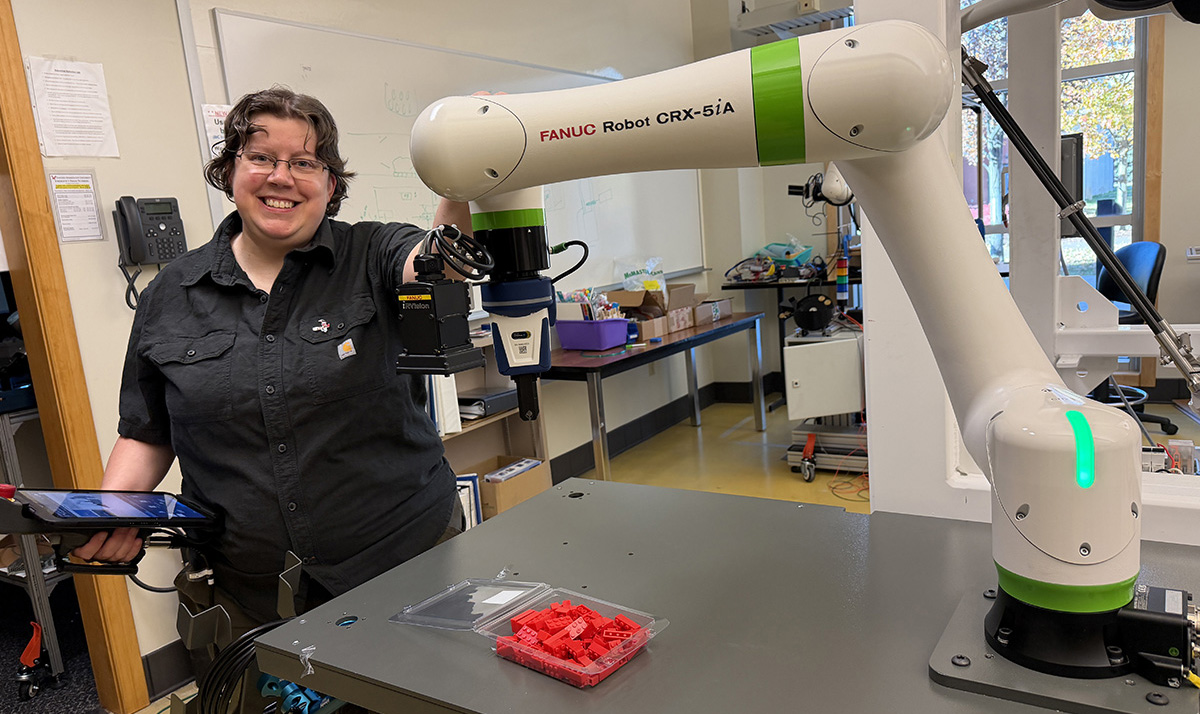
Eastern Washington University is launching a robotics certification program to train engineering and manufacturing students and employees of local companies.
The program, which debuted this fall, will make EWU one of just two universities within a 150-mile radius approved to teach operations and programming courses for robots built by Fuji Automatic Numerical Control, or FANUC. The company, founded in Japan in 1972, is one of the world’s largest manufacturers of industrial robotic systems.
Spokane is heavily invested in diverse areas of manufacturing that deploy robotic automation, among them pharmaceuticals, food and beverage, packaging, and aluminum production, says Jennifer Leaf, an assistant professor of mechanical engineering at EWU who holds a doctorate in robotics.
“Making sure that our manufacturing and technology students come out with a solid understanding of robotics and automation — in addition to [engineering’s] foundational principles — is critical,” says Leaf. “It’s a skillset they will need when they graduate, and five to 10 years down the road. That is where the field is going.”
Leaf will be guiding students through the FANUC CERT HandlingTool Operations and Programming course using a FANUC CRX-5iA Collaborative Robot, known as a “cobot.”
Designed to work safely alongside humans, the FANUC cobot is rapidly becoming an industry standard. While larger industrial robots must be caged off due to high operating speeds and a lack of proximity sensors, the cobot is portable and equipped with sensors that automatically trigger safety shut-offs if something is amiss.
Controlled via a tablet with drag-and-drop icons, the unit can be taught new skills directly by workers and tradespeople using it.
“The 12-year-olds of today are going to be the experts before you know it because it’s pretty intuitive,” Leaf says.
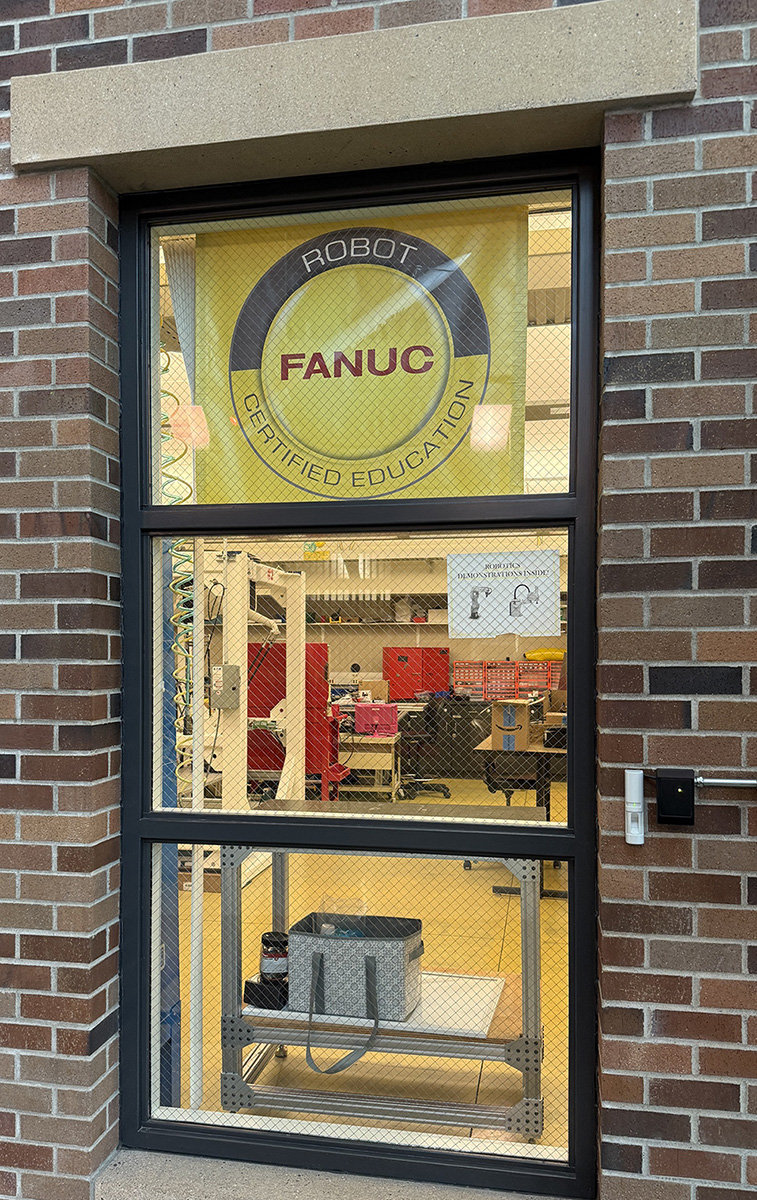
In the meantime, she’s readying to launch coursework for the robot operator certification, which involves the mastery of 40 skills with the cobot, including robot programming, material handling, and workcell simulation (to test programs prior to deployment).
Leaf’s credentials will allow EWU to offer local training for both students and regional workers, saving companies travel expenses and expanding the local talent pool. For EWU students it will provide a pathway to employment in the high-demand field of robotics.
The purchase of the robot and other equipment needed to launch the program was funded by a gift from Wagstaff, Inc., a Spokane Valley manufacturer of aluminum casting products with an 80-year history in the region, along with support from an EWU faculty supplemental budget grant.
“That was a fantastic donation on all sides,” says Leaf, who shared her appreciation for Wagstaff’s longtime support of EWU students.

The FANUC Certified Robot Operator Instructor certification is one of two Leaf says she will receive.
Next up will be the FANUC Certified Robot Technician Instructor, which she expects to complete the spring. The weeklong course, focused on advanced programming and robot vision, involves travel for the class and then follow-up testing to finalize the credential.
Both FANUC training certifications will be integrated into EWU’s engineering and manufacturing courses and made available to area employees through the university’s Professional and Continuing Education Program. EWU students began testing the curriculum in Friday labs in late October. Certification courses open to regional workforce partners will soon follow, with Wagstaff employees making up the first professional cohort.
The cobot joins 18 other machines — mostly FANUC units — used in EWU coursework established over the past two decades. Many were donated or heavily discounted by local industry partners looking to build a regional workforce pipeline.
As the labor pool contracts and older workers retire, Leaf says, employers are increasingly turning to automation to sustain operations and grow them into the future.
“The benefit is that machine tending tasks tend to be repetitive, boring and simple,” Leaf says. “We can have that work done by a machine, freeing human employees to do things that are more creative and challenging — tasks that require the critical problem-solving skills humans have and robots don’t.”


Find EWU faculty and staff who are experts in diverse subjects.