Progress Continues on Science Building Construction
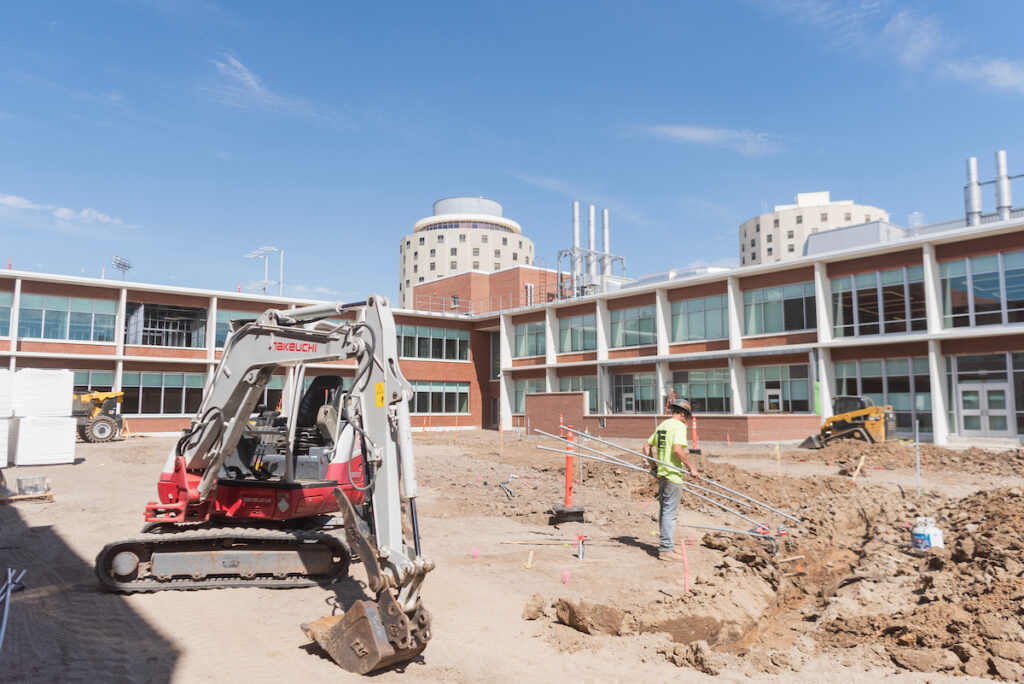
Eastern Washington University is well into the second phase of its Science Building makeover, as renovation work on the 1960s-era research facility continues.
EWU received funding from the state of Washington in 2022 to complete work on the 148,000-square-foot structure, part of a $100+ million project to modernize the entire building.
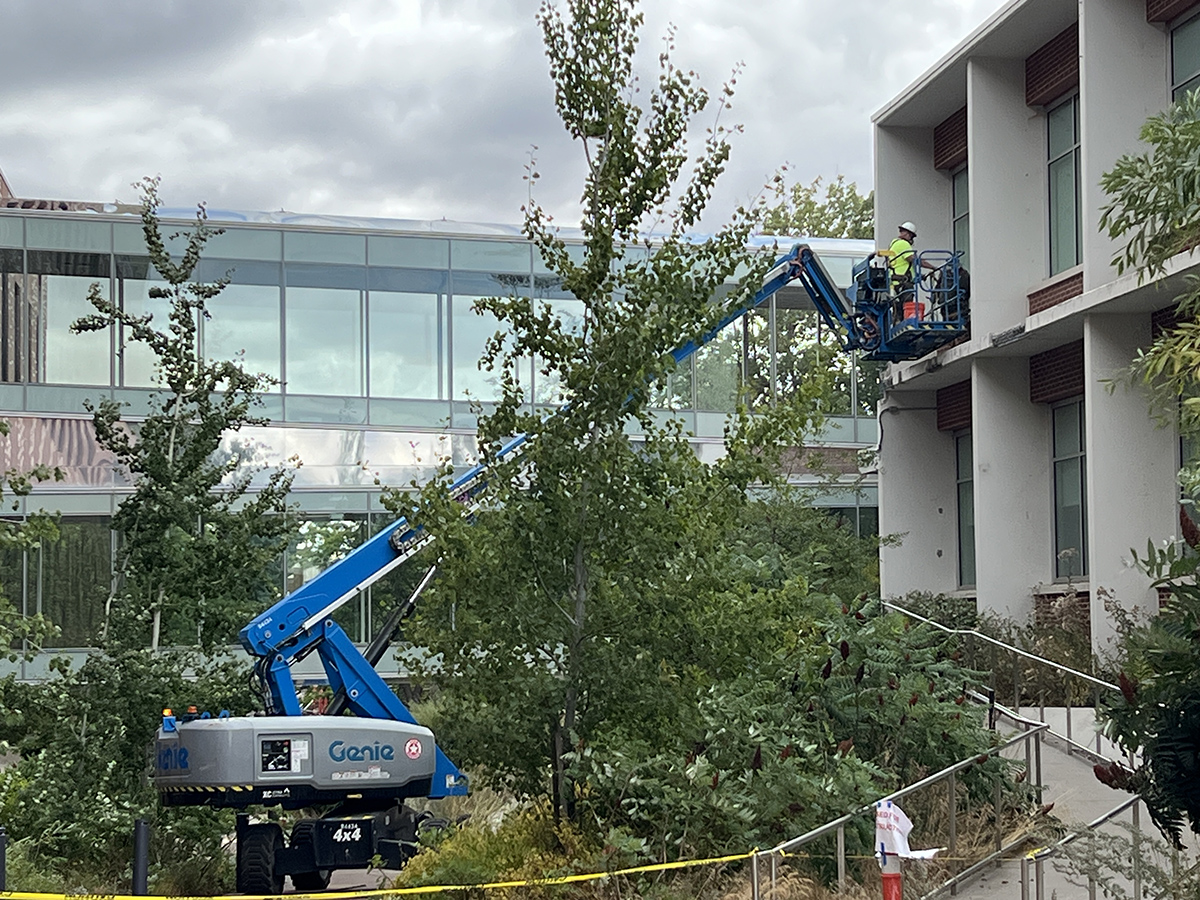
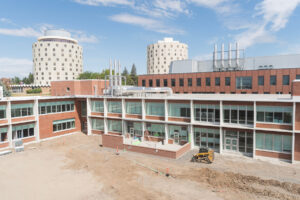
During a recent visit, a blue and silver boom, parked on the walkway between the Science Building and the Interdisciplinary Science Center, hoisted construction crew members up to the building’s upper level, where they patched and painted exterior concrete trim.
The exterior is among multiple areas receiving attention, as Eastern’s “Sputnik-era building” is transformed into a hub for modern-day research and instruction.
When completed, the Science Building, along with the 4-year-old Interdisciplinary Science Center (ISC), will form a science-focused complex that boasts state-of-the-art teaching and research laboratories, classrooms, study spaces and offices. The project will position Eastern to meet future research and education needs while supporting workforce demands.
A fall 2024 ribbon-cutting celebrated the completion of Phase 1 renovations – bringing together lawmakers and EWU trustees, faculty, staff and students to mark the major accomplishment and tour the new labs, offices and study areas.
Work on the second phase is well advanced, says Troy Bester, EWU project manager. The most visible improvements involve the exterior of the building and the courtyard, which will feature representations of multi-region botany and geology – all part of a plan to include unique common areas and student-engagement spaces.
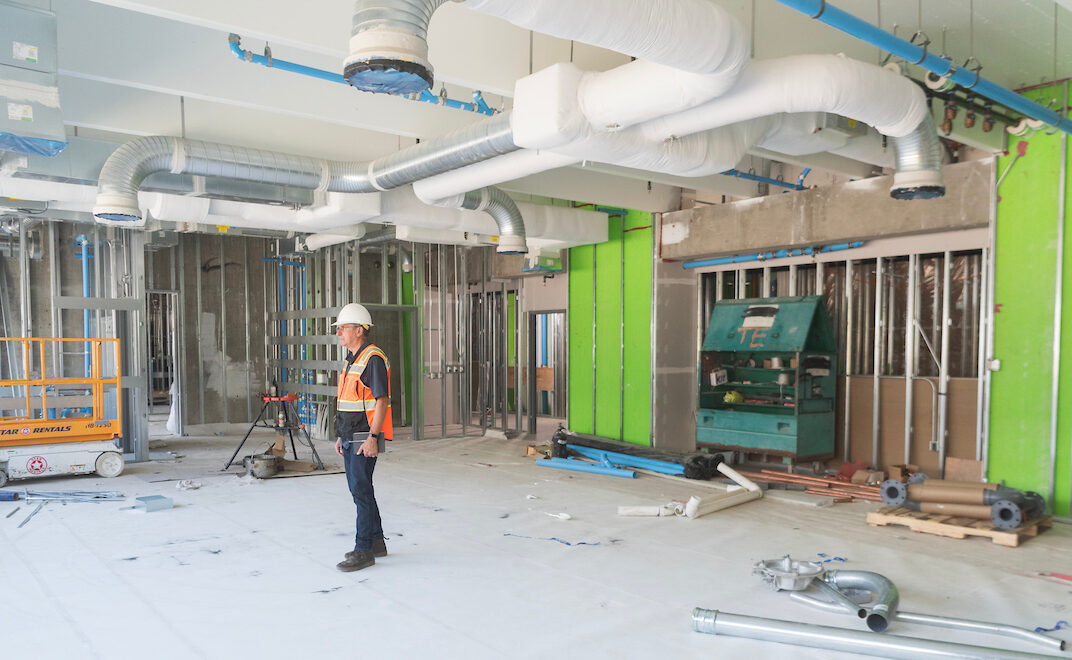
Some features, such as the “digital visualization theatre” (a planetarium dome), are expected to be ready by late winter, while the bulk of construction and landscaping are scheduled for completion next spring. When completed, this phase of construction will add nearly 30 lab and support spaces, 25 offices, another greenhouse (for a total of 2), and other interior and exterior improvements that support faculty-student research and overall learning.
Bester anticipates that faculty researchers who have been temporarily housed in Cheney Hall, Patterson Hall and the Computer Engineering Building will start moving into remaining sections of the building in the spring and summer.
A spirit of collaboration among faculty and administrators from the science disciplines has made the project run smoothly, Bester says. Faculty contributed valuable insights during the design process and tag-teamed operations in temporary labs and office spaces. “They are dealing with a lot throughout the process,” he adds.
EWU teams involved include the 11 Facilities shops, Trucking Services, Custodial Services, Grounds Maintenance and more. “Any project, large or small, takes a big team effort,” Bester says. These teams helped shape the initial design and worked closely with the contractor to integrate the new construction with existing campus infrastructure
“There’s a long list to be thankful for,” Bester notes. “The project is a true partnership.”
Bester says the project also brings together EWU’s CSTEM departments, Administration, Construction & Planning, Facilities, Integrus Architecture, sub-consultants and general contractor Leone & Keeble.
“Each team has played a vital role in shaping the vision and executing the work, making this transformation possible,” Bester says.
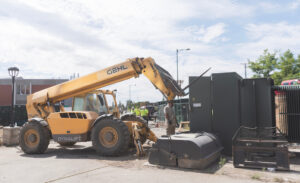
As work continues through the winter and spring, Bester says additional disruptions, such as temporary walkway closures, will be necessary to accommodate construction equipment and traffic. Most activity remains concentrated near the main site access point adjacent to Cheney Hall.
The fully renovated Science Building, encompassing both Phase 1 and Phase 2, is expected to be fully operational by fall 2026.
**Aaron Weer is a contributing photographer.



Find EWU faculty and staff who are experts in diverse subjects.