EWU Laboratory for
New Phenomenology

Our Vision

The Laboratory for New Phenomenology at Eastern Washington University seeks to understand people’s worldviews and the beliefs, thoughts, and values that are drawn from them.

Our Attitude

The Laboratory for New Phenomenology integrates both phenomenological and logical positivist outlooks in its exploration of culturally modulated variation in the worldviews that underlie human beliefs, thoughts, and values.

The laboratory’s central (though not exclusive) research method is a contemporary adaptation of phenomenology called Quantitative Phenomenology. This hybrid qualitative/quantitative set of standardized procedures is largely automated through a software program (Raven’s Eye) created by Dr. Lower and others; it greatly facilitates and expedites both phenomenological and scientific research on thought as it is expressed naturally.

Furthermore, it reduces inadvertent research bias while simultaneously providing the ability to make nomothetic comparisons of naturally expressed thought with known confidence estimates.
Our Projects

This project utilizes Quantitative Phenomenology to identify latent patterns in thought related to intrapsychic conflict by asking participants to tell stories in response to a series of pictures that form a stalwart and popular projective psychological assessment. In addition to the scientific benefits, this project holds the potential to develop a commercially viable automated scoring program specific to this psychological assessment.

This project uses Quantitative Phenomenology to produce an in-depth analysis of each major common theme in messages submitted by participants, while investigating potential correlates of thematic variation and comfort with sending such messages. This project collaborates with METI International, a global organization composed of scientists established in their fields, and involves its board in its planning and dissemination.

This project assesses thoughts about interpersonal dynamics as contextualized by current personal adjustment. It enhances both basic and applied understanding of the Rotter Incomplete Sentences Blank-2, a popular projective psychological assessment consisting of the written completion of 40 sentence stems. This project uses Quantitative Phenomenology to derive objective, reliable, and valid norms, and also holds commercial potential in addition to its scientific merits.

This project assesses multicultural identities through the intersection of national and ethnic or racial cultural identification. It produces normative scores for the Orthogonal Cultural Identification Scale (OCIS) according to contemporary ethnic and racial U.S. Census categories, and also with respect to American national culture generally. Quantitative Phenomenology is applied to open-ended questions asking participants to define key terms on the OCIS, such as what a “way of life,” “success,” or “traditions” means for them in terms of their selected ethnic or racial identities, as well as for American national cultural identification.

This project seeks to better understand the ecological, social, and spiritual influences on perceived differences between common everyday experiences as compared to relatively rare and transformative peak or ecstatic experiences, in which a person experiences a profound alteration in perceptions of oneself, others and the cosmos. Quantitative Phenomenology is used to assess variation in thoughts about the self, others, and the cosmos contingent on the ecology in which the experience occurs.

This project uses Quantitative Phenomenology to analyze the archived annual narrative reports of Turnbull National Wildlife Refuge (NWR) from the 20th Century, in order to identify patterns of impact on and integration with the local communities surrounding it, across its decades of existence. This project actively involves both the non-profit Friends of Turnbull NWR and the federal staff in its planning and dissemination, as well as collaboration with the Office of the Archivist at EWU’s JFK Library.

The Laboratory for New Phenomenology at Eastern Washington University currently maintains six ongoing programs of research applying Quantitative Phenomenology, five of which are exempted human subjects research and one that involves historic archival research. These programs all explore various determinants of thought, and toward that end include measured factors ranging from the ecological, cross-cultural, and historic to the multicultural, interpersonal, and intrapsychic while spanning topics with local to global impacts:

Our Researchers

  • Axton Monet, BA anticipated 2026 Research Teams Coordinator and Team Leader for HS-6434
  • Lenore Hartwig, BA anticipated 2026 Team Leader for HS-6438
  • Denis Mamonov, BA anticipated 2026 Team Leader for HS-6432
  • Jasmyne Newton, BA anticipated 2026 Team Leader for the Turnbull NWR project
  • El Sollman, BA anticipated 2026 Team Leader for HS-6433
  • Ethan Stahler, BA anticipated 2026 Team Leader for HS-6417

Contact the Lab Director

Timothy Lower, PhD

Lecturer
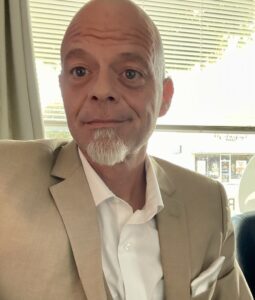
Photo of Timothy Lower, PhD
153C Martin Hall