Geosciences

Study the Earth Through
Hands-On Exploration

Interested in rocks, fossils, critical minerals, climate change, wildfire and water resources, or natural disasters?

In the EWU Geosciences program, you’ll study the Earth through real-world projects with community partners, faculty-mentored research, and immersive fieldwork experiences in the unique landscape where the Columbia Plateau, Okanagan Highlands, and Rocky Mountains converge.

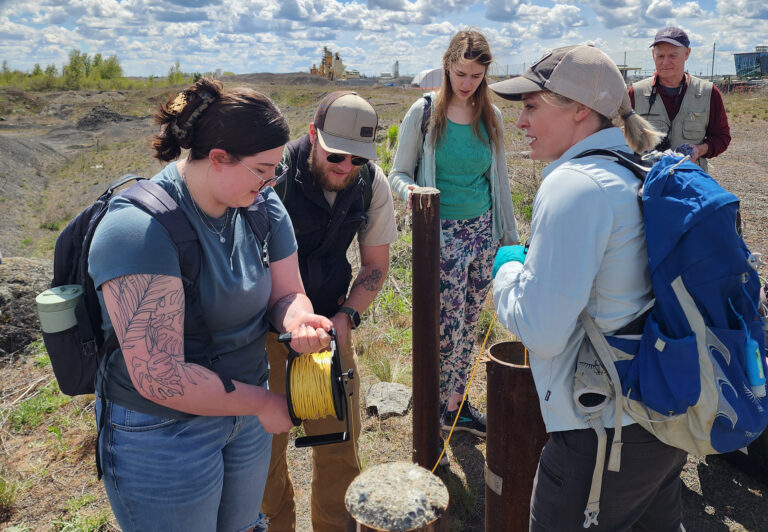
Whether you’re examining the geology of the Columbia Plateau, flying drones over the Palouse, collecting water samples from the Spokane River, or analyzing data in our state-of-the-art labs, you’ll gain practical skills that prepare you for graduate school or a wide range of careers.


Student presentations at conferences in the past 5 years

159

Graduates who have jobs in the field within a year of graduation

93%

Median pay for geoscience-related occupations

84k

Why Study Geosciences at the Region's Polytechnic?

Get a hands-on education, real-world experience, and personalized support from faculty so you can launch your career with confidence.

Industry Connections

Industry Connections

Collaborate with state, federal, and industry partners to address geological and environmental challenges facing the Pacific Northwest.

Faculty-Mentored Research

Faculty-Mentored Research

Work one-on-one with faculty to plan, execute, and present research at local, regional, and national conferences, including the Geological Society of America.

State-of-the-Art Facilities

State-of-the-Art Facilities

Build technical skills using professional-grade equipment and specialized facilities, including the Mineralogy Lab, Drone Research Center, and many others.

Experiential Learning

Experiential Learning

Experience geoscience outside the classroom with a variety of field-based courses, internships, and community-based projects.

Small Class Sizes

Small Class Sizes

Get to know your professors, connect with your peers, ask questions, and receive personalized support in every class.

Affordable Education

Affordable Education

Benefit from competitive tuition rates and financial aid options designed to help you graduate with little to no debt.


About EWU Geosciences


The Department of Geosciences is grounded in the natural sciences while being academically engaged with the cultural and social processes that shape the unique landscapes of our world.

Students pursuing a degree in the Department of Geosciences investigate human-environment interactions, including aspects of climate change, urbanization, and natural resource management. They also use advanced analytical skills and geosciences techniques.

Through faculty-student research and an innovative curriculum, we prepare our students for success in the professional job market or graduate studies.

Every class is hands-on. I’m in the lab, in the field, collecting samples, testing them—it’s not just textbook learning. When you’re out there, doing the work, it sticks with you in a way that reading alone never could.
Marilyn Smith '25
Surface Mine Reclamation Specialist, Washington State Department of Natural Resources
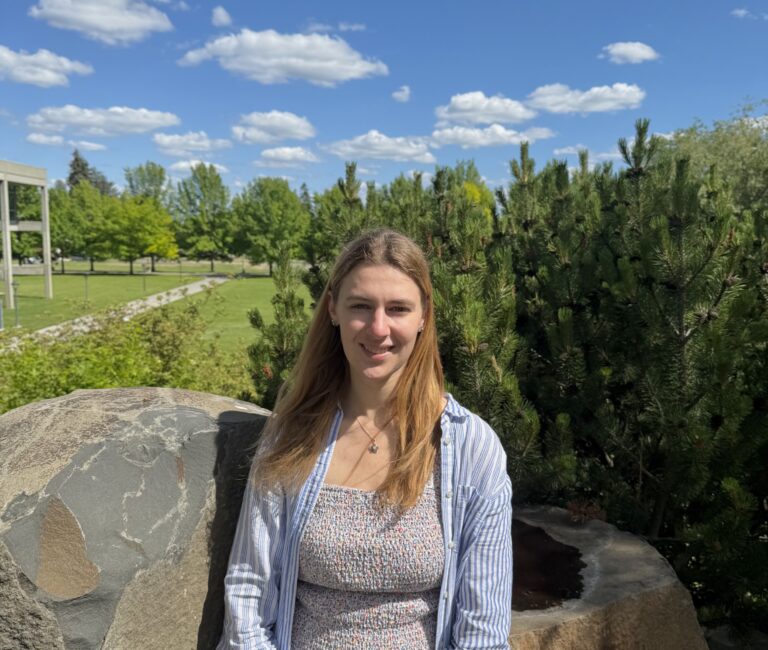
Marilyn Smith headshot

Careers in Geoscience

A Geosciences degree leads to many exciting career opportunities, including:

  • Geologist
  • Water Resources Specialist
  • Environmental Consultant
  • Paleontologist
  • Teacher
  • Environmental Scientist
  • GIS Analyst
  • Hydrologist
  • Environmental Nonprofit Manager
  • Geochemist
  • Astrogeologist

EWU Geosciences Facilities

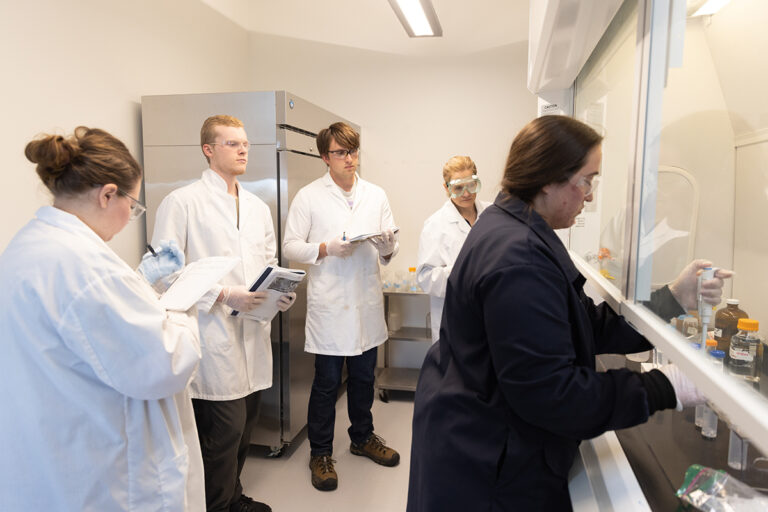
The Geochemistry Lab has equipment for preparing and analyzing water, soil, and rock samples for their elemental composition. We have an inductively coupled plasma optical emission spectrometer (ICP-OES) and a UV/VIS spectrophotometer. The lab also has:

  • Several fume hoods
  • A laminar flow hood
  • An ultrapure water system
  • An analytical balance
  • pH meters
  • Muffle furnace
  • Drying oven
  • Centrifuges
  • Hot plates

Geotechnical engineering represents the intersection of engineering and geology. Geotechnical engineers study the engineering properties of soil and rock as they relate to the safety and stability of human infrastructure.

The EWU Geotechnical Engineering Lab has equipment to perform a wide variety of ASTM standard tests. Tests include specific gravity, Atterberg limits (plastic and liquid limits of soil), sieve and hydrometer analysis of particle size distributions, optimal water content for compaction (both standard and modified Proctor tests), unconfined compressive strength, California bearing ratio (CBR) for soil and rock underlying roads and runways, long-term consolidation, liquefaction, and constant head and falling head permeability.

Equipment includes:

  • Multiple load frames
  • Various load cells and strainmeters
  • Consolidometer and dead-load weights
  • Standard and modified Proctor test molds and compaction hammers
  • CBR molds and equipment for standard and saturated CBR testing
  • Split molds and tampers
  • Large sieve shaker and sieves
  • Tabletop sieve shaker and sieves
  • Light-, medium-, and heavy-duty balances
  • Casagrande machines for liquid limit testing
  • Slurry mixers
  • Sample splitters
  • Drying ovens
  • Shake table for seismic analysis of soil behavior
  • Falling head permeameter
  • Constant head permeameter
  • Hydrometers and hydrometer cylinders
  • Sand cone density apparatus
  • Bucket and Edelman augers
  • Hammer corer
  • Assorted sampling and lab tools

The GIS Laboratory is located in the Science Building giving student access to cutting edge spatial technology. We have brand new, state of the art GIS facilities including a GIS classroom and a separate GIS Research Lab where students learn to solve complex spatial problems using advance spatial analysis and modeling skills.

The EWU Drone Research Center hosts a number of DJI drones for aerial imaging, thermal imaging and multispectral mapping, and are used in the Remote Sensing Certification.

The Invertebrate Paleontology Lab is equipped to:

  • Make thin sections and acetate peels
  • Produce photomicrographs of fossil specimens
  • Perform quantitative measurements of various morphological features

Diamond saws, diamond grinding wheels, and polishing machines can be used to produce polished specimens of fossils for thin sections and peels. Several microscopes and cameras are available to study and photograph both thin sections and peels. A digitizer board and measuring instrument simplify the quantitative aspects of working with fossils.

The primary group of fossil studies in the paleontology lab at Eastern are colonial marine organisms called bryozoans. Most of the morphological structures present in these organisms require microscopic studies to identify the various species of bryozoans. We are currently studying Permian bryozoans from Washington state, New Zealand, Russia, Pakistan, Nevada, and China.

The laboratory also contains a large library of books and articles on fossil bryozoans to aid our research.

The Sedimentology Lab is used for both teaching and research. The lab contains equipment to perform basic sieve analyses and grain size analyses of silts and clays, heavy mineral separation and basic soil engineering tests. We have also constructed a small Plexiglass flume to demonstrate sediment transport mechanics in alluvial channels, as well as a turbidity tank to simulate turbidity flows and associated deposition.

There is a large teaching collection of sedimentary rocks, both detrital and carbonate, for use in undergraduate classes. There is also a large collection of a wide variety of sedimentary structures. In addition, there are several sets of core from sedimentary sequences in Washington and from the Colorado Plateau.

A small office and prep room are attached to the main lab space and are used by students and faculty for special projects.

The Mineralogy and Petrology Lab is used primarily for undergraduate study and research. The laboratory has a collection of museum quality specimens available for viewing and numerous teaching specimens including Ward’s 100 North American Rocks and Minerals. The Cheney-Cowles Museum donated a beautiful collection of museum quality mineral specimens that are available for teaching. Another collection was acquired for display and/or teaching from Paul and Alice Weis, both retirees from the local office of the United States Geological Survey. A hallway display of some of their specimens is updated on a regular basis for viewing by the general public.  Most recently, the department acquired a collection from Elizabeth Lynch Williams Ralls consisting of micromounts and small samples of nicely crystallized minerals that are instrumental in teaching crystallography.

The laboratory also has a collection of ball-and-stick models (14 Bravais Lattices, six Crystal Systems, and several minerals including halite, graphite, and diamond) for teaching purposes. Mineral identification by students is facilitated with hardness kits, streak plates, glass plates, and magnets.

The laboratory is equipped with ten CX31-P Olympus student petrographic microscopes. The department also has a mobile petrographic teaching workstation consisting of a high-resolution Javelin video camera (CV-730) that mounts onto a microscope for thin section study or onto a Computer macroscopic zoom lens for viewing mineral/rock specimens on a 19″ SONY Trinitron color video monitor. This petrographic workstation aids in teaching optical mineralogy and petrology.

Students and faculty utilize the state-of-the-art Thin Section Lab for rock and mineral sample preparation including cutting, grinding and polishing of rock and mineral specimens. The facility maintains five rock saws, equipped to handle large and small samples, five variable speed grinder-polishers, an automatic vibratory polisher, two slab polishers and two thin section machines, including a Microtec semiautomatic machine capable of producing both standard and large-format thin sections.

The Weissenborn Map Library, named in memory of Al Weissenborn, a USGS geologist  houses an extensive collection (20,000-plus different titles) of topographic, geologic and other thematic maps encompassing the Pacific Northwest and the world beyond that are available to students and faculty for use in teaching and research.

Prepare for Professional Geologist Licensure

The EWU Department of Geosciences prepares students to pursue professional geologist licensure through a strong foundation in applied geology and relevant coursework. This preparation can help students meet the education requirements to sit for the national ASBOG exam, which is part of the licensure process in most states.

More than 80% of EWU geoscience graduates gain employment with local geologic companies, government agencies, or graduate programs. Graduates are prepared to work in areas such as groundwater, soil, economic geology, and construction.

Geologists apply their expertise to challenges involving environmental sustainability, human health, and natural resources, making a strong foundation in geologic concepts essential for the profession.

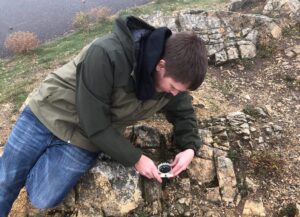
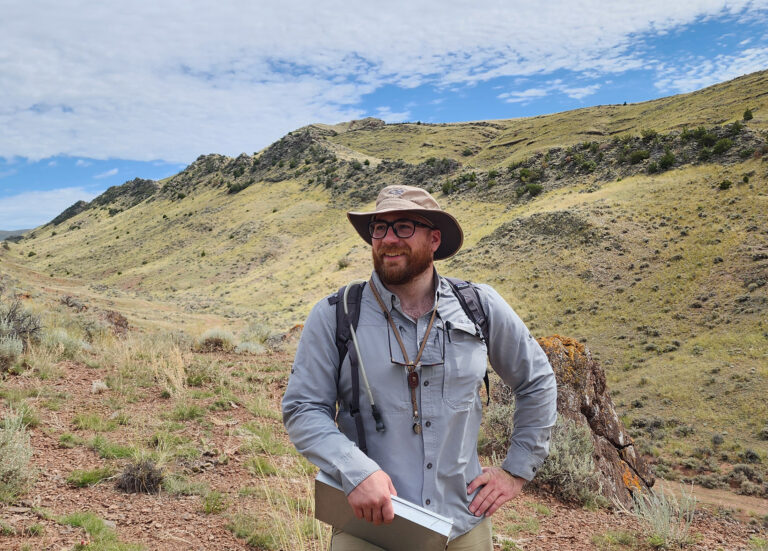
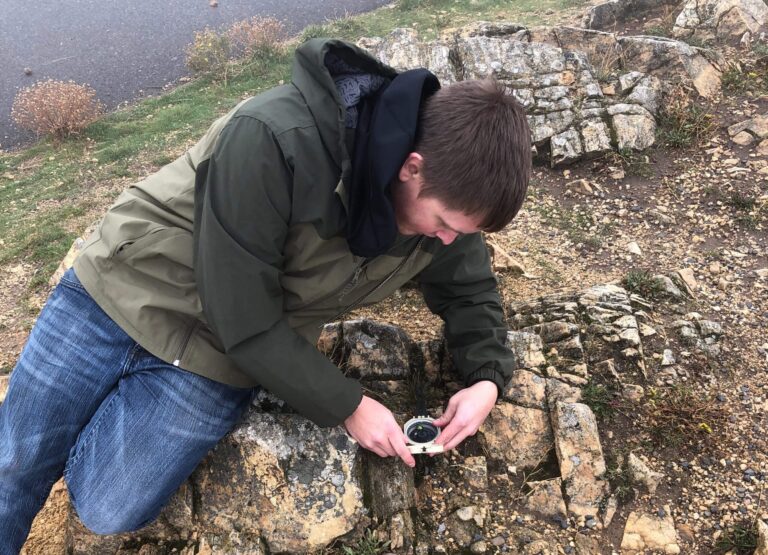
Geoscience student out in the field using a tool to examine a rock

Scholarships & Grants

The Alumni-Funded Undergraduate Research Grant was established in 2013 to support research done by undergraduate  students at Eastern Washington University.  The grant was initiated from a generous donation from a former student who graduated from EWU with a B.S. in Geology in 2003 and from Baylor University with a Ph.D. in Geology. He is currently a research geologist and technical team leader at Exxon Mobil in Houston, TX where he works with others to predict the presence of oil/gas reservoirs in remote and under-explored parts of the world.

Application Deadline: Second Friday of the fall, winter, and spring quarters.

Eligibility:

  • Applicants must be an EWU undergraduate student with a major declared in Geology (B.S. or B.A.) or Environmental Science (with an emphasis in Geology).
  • Applicants must have at least a 3.0 GPA in his/her geology/environmental science courses, and at least an EWU 3.0 GPA overall.
  • A professor in the Department of Geology must supervise student research.
  • All application materials must be received by the deadline.

Use of Funds:

A student in good standing may be awarded a maximum of $300 during their time at EWU. Funds may be used for:

  • field or lab supplies,
  • sample analyses, or
  • travel expenses required for fieldwork and/or sample analyses.

Funds may not be used for personal field gear (e.g., hiking boots), salary, travel expenses for a professional meeting, tuition, or textbooks.

Those who receive an award are expected to:

  • present their work at the EWU Research and Creative Works Symposium or other professional meetings and
  • submit a final report to the Geology Department immediately following the completion of the project.

The report should detail how the award was spent, a summary of the research, and a list of any publications or presentations given at the EWU Research and Creative Works Symposium or professional meetings generated by this research.

Application Procedure:

  1. Complete the application form (PDF).
  2. Submit an electronic copy to our Department’s Administrative Assistant (jsamson1@ewu.edu) and the Department Interim Chair, Dr. Robert Sauders (rsauders@ewu.edu)  and your faculty advisor on the second Friday of the fall, winter, or spring quarters.
  3. Recipients will be announced by the fourth week of the quarter.

This scholarship is dedicated to the memory of Al Weissenborn, a prominent geologist who was in charge of the U.S. Geological Survey office in the Spokane area from 1946 to 1973. Donations from former EWU students, faculty, the Weissenborn family, and friends from the geologic community have made this scholarship possible.

Students holding a junior standing may submit their application. Please include your resume. The criteria that will be taken into consideration include overall GPA and departmental community service.

Completed applications can be submitted to geosciences@ewu.edu 

Application deadline is April 1st.  Please note all application will apply towards next academic year.

Apply

Felix Mutschler dedicated 45 years to his professional career in geology—combining classroom teaching, research, and fieldwork. Mutschler had a special interest in our introductory physical geology course and devoted special effort to its excellence. Wanting to ensure that more students can have the opportunity to be inspired by geology, the Geology Department has created scholarship in honor of Mutschler. This scholarship is for pre-junior standing students early in their geology academic career.

You may apply if you are enrolled in junior level geology courses and have an overall 3.0 GPA. Completed applications can be submitted to geosciences@ewu.edu

Application Deadline is April 1st. Please note all application will apply towards next academic year.

Apply

The Rock Rollers Club of Spokane has been fundraising the EWU Geology Department since 1984; you can see rock collections from its members on display. The Rock Rollers Field Camp Scholarship is dedicated to students residing in the Inland Empire, who will be attending the EWU summer field camp. It is a way to help pay the required expenses of attendance.

You may apply if you are enrolled in GEOL 490, Senior Capstone: Geology Field Camp.

Application Deadline is April 1st.

Apply

Submit completed application to geosciences@ewu.edu. 

You can apply for financial support with undergraduate research from the CSTEM Undergraduate Research & Creative Activities Fund for the following:

  • Lab supplies and equipment. Describe the supplies needed and budgeted amount.
  • Fieldwork travel. Fieldwork expenses may be reimbursed and must follow university travel procedures.
  • Conference travel. Reimbursement for conference fees and travel must follow university travel procedures.

Fund Your Project

For the last few decades, EWU and the Spokane Office of the US Geological Survey have collaborated on a project, Geologic Research in Support of Mineral Resource Studies in the Inland Northwest. EWU is one of the very few universities in the nation to place paid student employees with the US Geological Survey to assist with Mineral Resource projects.

For more information, please contact Chad Pritchard, PhD at cpritchard@ewu.edu.

Geoscience students are awarded approximately $12,910 in scholarships each year—just one part of the $9.7 million EWU awards annually to nearly 1,500 students through a single scholarship application. Scholarships aren’t just for top GPAs or athletes—they’re based on your major, background, community service, and more. And the best part? Scholarships are free money you don’t have to pay back.

The EWU General Scholarship Application for the academic year opens Nov. 1 and closes Feb. 1.


Additional scholarship and grant opportunities are listed below.